
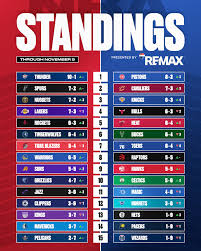
Understanding how NBA standings work can feel confusing for new basketball fans. With win percentages, conferences, divisions, and playoff seeding involved, the standings table often looks more complicated than it really is.
This beginner-friendly guide breaks everything down in simple terms, helping you understand NBA standings explained clearly, how teams are ranked, and how playoff positions are decided.
🏀 What Are NBA Standings?
NBA standings show how well each team is performing during the NBA regular season. Teams are ranked based on their win-loss record, which determines their position in the league.
The standings answer key questions such as:
- Which teams are winning the most games?
- Who is likely to make the playoffs?
- How teams rank within their conference
🏆 NBA Conference Structure Explained
The NBA has 30 teams, divided into two conferences:
🔵 Eastern Conference
- 15 teams
- Includes teams like the Celtics, Bucks, Heat, and Knicks
🔴 Western Conference
- 15 teams
- Includes teams like the Lakers, Warriors, Suns, and Nuggets
Each conference is further divided into three divisions, but divisions matter far less today than they did in the past.
👉 Teams are ranked only against teams in their own conference, not the entire league.
📊 How NBA Standings Are Calculated
The core ranking system is simple:
1️⃣ Win-Loss Record
- Every team plays 82 games
- Wins (W) and Losses (L) determine ranking
2️⃣ Win Percentage (Win %)
Instead of total wins alone, the NBA uses win percentage:
Win % = Wins ÷ Total Games Played
This helps fairly rank teams who have played different numbers of games due to scheduling.
🔁 Why NBA Standings Change Frequently
NBA standings update daily because:
- Teams play almost every night
- Injuries affect results
- Strength of schedule varies
That’s why you may see rapid movement in rankings, especially during the middle of the season.
⚖️ NBA Standings Tiebreaker Rules Explained
When two or more teams have the same record, NBA standings tiebreaker rules decide who ranks higher.
Common Tiebreakers:
- Head-to-head record
- Division winner status
- Conference record
- Record against playoff teams
- Point differential
These rules are especially important near the playoff cutoff.
🎟️ How NBA Playoff Standings Work
Understanding how NBA playoff standings work is crucial for fans.
🟢 Automatic Playoff Spots
- Top 6 teams in each conference qualify automatically
🟡 Play-In Tournament
- Teams ranked 7th to 10th
- Compete for the final two playoff spots
🔴 Eliminated Teams
- Teams ranked 11th to 15th
- Miss the playoffs entirely
🧮 NBA Playoff Seeding Explained
Playoff seeding determines who plays whom in the postseason.
Seeding Basics:
- #1 seed plays #8 seed
- #2 seed plays #7 seed
- #3 seed plays #6 seed
- #4 seed plays #5 seed
Higher seeds get home-court advantage, which often plays a major role in playoff success.
🆚 Eastern vs Western Conference Standings
While both conferences follow the same rules, competition levels can differ.
Key Differences:
- One conference may have more strong teams
- A team with a better record in one conference could still miss the playoffs
- Standings are not combined across conferences
This explains why teams sometimes seem “better” but still rank lower.
📅 NBA Regular Season Standings Timeline
Early Season
- Standings are unstable
- Small win/loss streaks cause big jumps
Mid-Season
- Rankings begin to stabilize
- Playoff contenders emerge
Late Season
- Playoff races tighten
- Tiebreakers become crucial
❓ Common Questions Beginners Ask
❓ Do divisions still matter?
Not much. Divisions mainly affect scheduling, not playoff qualification.
❓ Can a team with fewer wins rank higher?
Yes, if their win percentage is better.
❓ Are standings more important than stats?
Yes. Team standings matter more than individual player statistics for playoff qualification.
📌 Why Understanding NBA Standings Matters
Knowing how NBA standings work helps you:
- Follow playoff races
- Understand sports news better
- Make sense of expert predictions
- Enjoy games with more context
Whether you’re a new fan or casual viewer, understanding standings turns confusion into clarity.
🏁 Final Thoughts
NBA standings may look complex, but once broken down, they are easy to follow. By understanding win percentage, tiebreakers, conferences, and playoff seeding, you’ll be able to track your favorite team confidently throughout the season.
If you’re just starting out, this guide to NBA standings for beginners gives you everything you need to know—without overwhelming stats or jargon.
