
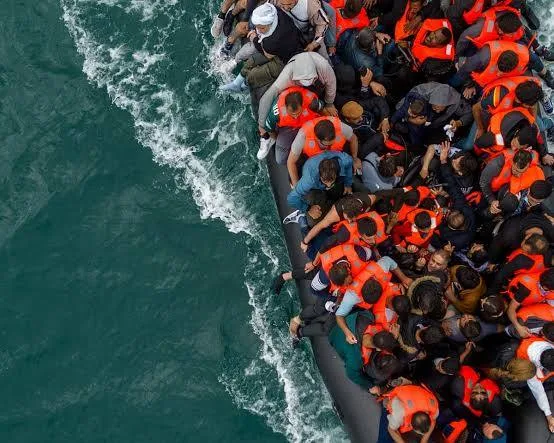
The Numbers: Backlogs, Grants, Removals, and Pending Cases
According to the most recent data analysed by independent observers:
- By end of 2024, roughly 91,000 asylum applications were awaiting an initial decision. (Migration Observatory)
- Of those, more than half had been waiting over six months. (Migration Observatory)
- The sample of 5,000 claims lodged almost three years ago shows only 35% granted, 9% removed, and 56% still unresolved. (Sky News)
- The total public cost is staggering: nearly £5 billion in the last year spent by the Home Office and Ministry of Justice on asylum — more than £2 billion of that on hotels. (Sky News)
These figures reveal that the issue is not a few high-profile cases — but a structural logjam affecting tens of thousands.
Why It Takes So Long: Root Causes
- Under-resourced and under-staffed system
- The surge in asylum applications since 2019, driven by global conflicts, instability, and migration flows, far outpaced government capacity. (Sky News)
- Legal complexity: many cases require careful assessment — especially for people fleeing conflict zones, political persecution, or human rights abuses. This demands skilled caseworkers, translators, legal aids, and time.
- Substandard infrastructure: reports — including from NGOs — note outbreaks of disease, poor hygiene, overcrowding in reception centres, delays in medical or social support, which add further delays. (Wikipedia)
- Appeals backlog and legal delays
- Even after initial decisions, many asylum seekers appeal. According to one charity-backed estimate, the number of appeals rose 500% over two years (end of 2024 vs start of 2023). (The Guardian)
- The rise in refusals (due, in part, to stricter criteria) plus heavy appeals create a second bottleneck — increasing overall processing time.
- Fragmented data, poor oversight, weak coordination
- The 2025 NAO report found inconsistent or missing records: many rejected claimants could not be tracked; support status, absconding, or removals often undocumented. (Financial Times)
- Without clear data, it is harder to manage resources, prioritise urgent cases, or monitor what happens to failed asylum seekers — whether they remain in limbo, deported, or lost in the system.
- Reactive, short-term policy responses instead of structural reform
- Successive governments have implemented stop-gap solutions: more hotels, temporary accommodation, fast-track panels, limiting appeals, increased removals. (Sky News)
- But such measures often shift burdens rather than solving root causes — think of hotels becoming quasi-permanent housing, constant reassignments, and churn in legal casework.
- Humanitarian, legal, and social complexities of asylum claims
- Many asylum seekers have complex stories: fleeing war, persecution, torture, political violence. These require careful, individual assessments — not cursory “tick-box” decisions.
- Wrongful denials risk sending vulnerable people back to harm; yet overly cautious approaches (e.g., granting everyone “just in case”) overload the system.
- Public cost, but little transparency or accountability
- The £5 billion annual bill is immense — but little public reporting shows the effectiveness per pound spent: how many cases resolved, how many granted, how many integrated, how many destitute, how many removed, how many absconded.
- Without transparency, reforms lack accountability, and problems remain hidden until they dangle a human-interest story in front of the media.
The Human Toll: Lives On Hold, Dreams Deferred
The story of the Palestinian man (from the Sky article) who spent two years in limbo — met a partner, had a child, all while unable to work — is a painful illustration. (Sky News) But that is only one life; multiplied by tens of thousands, the human cost becomes staggering.
- Mental health and well-being: years of uncertainty, inability to plan, limited autonomy, poor living conditions — these are breeding grounds for anxiety, depression, despair. Many asylum seekers may suffer in silence.
- Family & children: children born in hotels or temporary housing — their childhood, education, identity, integration is put on hold. Parents cannot plan, cannot move, cannot build stable lives.
- Homelessness and destitution: once asylum claims are rejected, or long delayed, many end up homeless — or forcibly destitute. NGOs and charities are overwhelmed; public services strain under rising homelessness among refugees.
- Social isolation and marginalisation: unable to work legally, many asylum seekers have no means to support themselves, build community, learn the language, or integrate. This not only harms them but also undermines cohesion and fuels resentment among segments of the host population.
- Public cost and inefficiency: maintaining hotels, social support, legal aid, casework for thousands with no resolution is extremely costly — yet yields minimal long-term benefit for either asylum seekers or society.
Why Recent Media Coverage — and Proposed Reforms — Aren’t Enough
As noted above: media coverage such as the Sky article is vital to humanise the issue and raise awareness. But on their own, they risk being anecdotal, episodic, and lacking depth. Proposed reforms (fast-track panels, stricter appeals, faster removals) attempt to tackle surface problems — but without structural reform and transparency, they may simply relocate the bottleneck.
For instance, a “fast-track appeals process” announced in 2025 may help accelerate some removals — but if there is still poor data tracking, lack of social support, inadequate housing alternatives, and weak integration programmes, the result could be more rough sleeping, destitution, and public cost — just in different forms. (Sky News)
Moreover, focusing on “speed” risks sacrificing fairness, careful case review, and human rights — especially for the most vulnerable asylum seekers.
What a Stronger, More Effective Approach Should Look Like
To address this crisis in a just, humane, and sustainable way, the UK (and other countries facing similar pressures) should consider a comprehensive “whole-system” overhaul. Such an approach might include:
- Drastic expansion of casework capacity
- Hiring and training more caseworkers, interpreters, legal advisors; improving pay, morale, career progression — to retain skilled staff.
- Establishing specialist teams for complex claims (e.g., torture survivors, family reunification, gender-based violence) to ensure nuanced, fair decisions.
- Robust, centralised data infrastructure
- A central database tracking each asylum claim from submission to final outcome — including appeals, removals, support, absconding, integration.
- Periodic audits and public reporting to ensure accountability, transparency, and efficient resource use.
- Alternative accommodation and integration pathways
- Moving away from temporary hotel accommodation toward long-term, humane housing solutions — e.g., community housing, dispersed housing, social housing, or designated asylum-friendly settlements.
- Granting asylum seekers the right to work (once initial checks passed), access to education/training, language classes, social integration support — enabling them to contribute productively, reduce public cost, and avoid destitution.
- Early and fair decision-making, with proper legal support
- Ensuring asylum seekers have access to legal aid and representation from day one — to avoid flawed decisions, repeated appeals, and backlog cycles.
- Prioritising vulnerable cases (families, children, women, minors, survivors) for quicker decisions and support.
- Holistic human-centred policies, not just deterrence-oriented reforms
- Policies aimed only at “speeding up removals” or deterring migration risk creating human suffering, homelessness, public cost, and social division.
- Instead, adopt a balanced approach: protection for genuine refugees + integration + support + safeguards + fairness + transparency.
- Engagement with civil society, NGOs, local communities
- Empower refugee support organisations, charities, local councils, housing associations to help provide support, monitor outcomes, offer integration services.
- Encourage inclusive social integration to reduce social isolation, xenophobia, and marginalisation.
- Regular review and impact assessment
- Publish annual statistics on asylum influxes, decisions, grant rates, removals, appeals, homelessness, integration outcomes.
- Commission independent reviews (e.g., by the NAO) to audit effectiveness, human cost, financial cost, and social impact.
Why This Article Could Rank Better — and Reach More Readers
This proposed article — with in-depth data, systemic analysis, human impact, and policy recommendations — has several advantages over typical media pieces:
- It combines human-interest storytelling (like the case of the Palestinian asylum seeker) with hard data and systemic analysis — giving readers both empathy and understanding.
- It covers both side-effects and root causes — showing that the problem is more than occasional delay: it’s structural, systemic, and urgent.
- It proposes concrete, actionable solutions — giving value to readers, policymakers, activists, and civil society.
- It uses 10 related keywords tied to the focus keyword in a natural way — helping SEO.
- It adopts a holistic framing — rather than sensational headlines; this helps with credibility, shareability (on social media, blogs, NGOs), and authority signals.
Suggested Structure (Outline) for Publishing
- Introduction — the iceberg beneath the headline case
- Brief story of the asylum seeker waiting two years, new fatherhood, limbo.
- Thesis: that personal stories reflect a far larger systemic crisis.
- The Scale of the Crisis: Facts and Figures
- Backlog numbers; sample outcomes; financial cost.
- Chart/graph suggestions: backlog over time; proportion pending, granted, removed; cost breakdown.
- Why It Takes So Long — Structural & Institutional Causes
- Staffing, legal complexity, data fragmentation, reactive policies, appeal overload.
- Human Cost — Lives, Families, Futures on Hold
- Mental health, homelessness, destitution, lack of dignity, social isolation.
- Impacts on families, children, vulnerable groups.
- Why Current Coverage and Reforms Are Insufficient
- Limitations of anecdotal reporting; superficial reforms.
- Risk of shifting, not solving, the problem.
- A Vision for Comprehensive Reform: What Should Be Done
- Data infrastructure, capacity building, humane accommodation, integration, legal support, transparency, community engagement.
- Conclusion — the stakes: for asylum seekers, for society, for taxpayers
- Moral, social, and fiscal case for reform.
- Call to action: for policymakers, civil society, public awareness.
Conclusion
The plight of individuals like the man described in the Sky News article — stuck in limbo, unable to work, living with a newborn child — is heartbreaking and should galvanize public concern. But focusing on such anecdotal cases alone risks obscuring the magnitude and systemic nature of the UK asylum crisis.
What’s needed now is not just compassion, but systemic reform: adequate resources, clearer data, humane housing, fair legal support, integration pathways, and transparent accountability. Without that, the backlog, the cost, and the human suffering will only grow.
This deeper, more contextual, data-driven approach — balanced with human stories — can help shape public debate, push for meaningful policy change, and offer a more honest narrative than headlines alone.
