
Introduction
In December 2025, the seventh edition of the bilateral army exercise between the Singapore Army and the People’s Liberation Army (PLA) commenced in Singapore under the banner of Exercise Cooperation. While official press releases — including those from China’s Ministry of National Defence, China Daily Asia, and Singapore’s Ministry of Defence — provide basic facts and formal statements about the training, they fall short in strategic analysis, geopolitical context, operational detail, and balanced perspective. This article synthesizes verified information, identifies key reporting gaps, and delivers a deeper, more comprehensive look at this high-profile exercise. (eng.mod.gov.cn)
What Is Exercise Cooperation 2025?
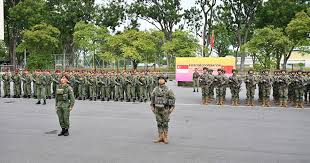
Exercise Cooperation 2025 is a bilateral army training exercise hosted in Singapore from 10 to 17 December 2025, featuring personnel from:
- the Singapore Armed Forces (SAF) — specifically the 3rd Singapore Division and 1st Commando Battalion, and
- the People’s Liberation Army (PLA) — 74th Army Group from the Southern Theatre Command. (Ministry of Defence)
This year’s focus is on urban counter-terrorism operations, conducted for the first time at SAFTI City, Singapore’s high-rise urban training facility. Tasks include tactical drills, live-fire exercises, drone reconnaissance, and battalion-level field training aimed at fostering interoperability and professional exchanges between the two militaries. (Ministry of Defence)
Analysis of Source Reporting: What They Got Right
Across the official releases and China Daily coverage, several strengths appear:
1. Accurate Description of the Exercise
All sources confirm the dates, participating units, and general theme of urban counter-terrorism. (China Daily Asia)
2. Emphasis on Bilateral Ties
The releases highlight friendly defence relations and mutual trust-building — an important diplomatic message. (Ministry of Defence)
3. Official Statements from Commanders
Quotations from senior officers on shared learning and professional exchange underscore official priorities. (Ministry of Defence)
Major Gaps in Reporting: Critical Shortcomings
Despite covering the basics, all source articles share similar limitations:
1. Lack of Strategic Context
None of the official reports explain why this exercise matters beyond institutional friendly rhetoric. While they say it strengthens ties, they don’t frame this within broader regional security dynamics, such as:
- ASEAN regional security concerns,
- shifting defence postures in Southeast Asia,
- implications for China’s defence diplomacy, or
- Singapore’s balancing strategy with the U.S. and China. Relevant background on defence agreements like the 2008 / 2019 Agreement on Defence Exchanges and Security Cooperation (ADESC) is absent. (Wikipedia)
2. Minimal Operational Insight
Details such as:
- specific training scenarios,
- tactical lessons learned,
- evaluation metrics,
- integration of technology (e.g., drones, simulation systems),
are not elaborated beyond generic mentions. This leaves the reader without a sense of real capability progression.
3. No Regional or Global Geopolitical Lens
Sources do not place the exercise within:
- the shifting strategic landscape shaped by U.S.–China competition,
- Singapore’s broader military diplomacy,
- other multilateral exercises in the Indo-Pacific, or
- comparative analysis with exercises like Cobra Gold or Talisman Sabre. (AP News)
4. Absence of Independent or Critical Voices
There is no mention of:
- independent defence analysts’ views,
- criticisms or potential concerns from ASEAN partners,
- how civil society or policy circles interpret deeper PLA involvement,
- Singapore’s defence interests relative to China.
Without external perspectives, reporting conveys only the official narrative.
Why This Exercise Matters: Deeper Strategic Insight
To understand the broader significance of Exercise Cooperation 2025, it helps to contextualize both countries’ defence priorities.
1. Singapore’s Strategic Defence Diplomacy
Singapore pursues multi-directional defence diplomacy:
- it maintains strong ties with the U.S.,
- deepens engagement with China,
- and engages bilaterally with other partners such as India (e.g., SIMBEX). (Wikipedia)
This balanced diplomacy is central to Singapore’s security approach within a competitive Indo-Pacific.
2. China’s Defence Diplomacy in Southeast Asia
China has been actively expanding defence cooperation with ASEAN partners, including Singapore. Analysts note that such exercises are part of China’s broader defence diplomacy — a strategic maneuver to build influence and shape regional security norms alongside other engagements. (Irsem – Preprod)
3. Shared Focus on Counter-Terrorism
Urban counter-terrorism training reflects shared security priorities in the post-9/11 era. Cities increasingly face complex threats, and training together can yield practical benefits for both forces. However, official messaging does not elaborate on how each side’s doctrine or operational approach differs or converges.
4. Regional Security Implications
In a region where geopolitical competition is rising, such exercises can serve multiple purposes:
- confidence building,
- capability enhancement,
- political signalling,
- deterrence messaging.
Yet, official sources don’t analyze how this fits with ASEAN defence strategies, combined exercises with other powers, or the balance of military cooperation across the region.
Enhanced Narrative: What the Public Should Know
An expanded account of Exercise Cooperation 2025 should integrate:
A. Singapore’s Defence Posture and Balance of Power
Singapore seeks to balance relations with major powers — maintaining robust ties with the U.S. while engaging China on mutual security issues. This balancing act explains why Singapore participates in multiple exercises globally without tethering itself exclusively to any single bloc. (Wikipedia)
B. China’s Evolving Military Engagement
China uses exercises such as Exercise Cooperation as part of a broader strategy to project security partnerships and build practical interoperability with regional forces. This is part of its defence diplomacy toolkit, which also includes naval exercises, defence dialogues, and port visits. (Irsem – Preprod)
C. Urban Counter-Terrorism: A Growing Priority
Urban operations — especially counter-terrorism — are central to modern military training because cities present dense, complex environments where conventional and asymmetric threats converge. The choice of SAFTI City underscores Singapore’s commitment to sophisticated training environments.
D. People-to-People and Professional Relations
While official reports mention people-to-people ties, they should also highlight how sustained professional contact can reduce misperceptions and build channels for crisis communication — an increasingly relevant concern in volatile geopolitical settings.
Comparative Context: Other Exercises and Regional Trends
It’s valuable to compare Exercise Cooperation with other exercises to understand scale and strategic focus.
1. Cobra Gold
This U.S.–Thailand led exercise includes dozens of nations and supposes a very different security architecture from China’s bilateral drills. It signifies broad multilateral cooperation rather than bilateral defence diplomacy. (AP News)
2. SIMBEX and Maritime Drills
Singapore’s naval cooperation with India (e.g., SIMBEX) indicates how Singapore diversifies its defence engagements beyond immediate geography and traditional partners. (Wikipedia)
Discussing these exercises in concert with Exercise Cooperation provides richer context on how Singapore shapes its defence partnerships.
Policy and Public Implications
A more robust public understanding of Exercise Cooperation requires debate and scrutiny:
- How does deeper PLA engagement align with Singapore’s long-term strategic interests?
- Does this cooperation influence regional perceptions of ASEAN neutrality?
- What safeguards exist to ensure exercises focus on shared security without unintended political signalling?
These questions deserve expert analysis — not just official statements.
Conclusion
Exercise Cooperation 2025 represents a noteworthy chapter in China-Singapore defence engagement. However, existing coverage — dominated by official press releases — fails to explore strategic context, operational insights, regional implications, and independent viewpoints. A comprehensive narrative must go beyond dates and diplomatic niceties to unpack why such exercises matter in a world marked by shifting power dynamics and increasing security complexity.
