
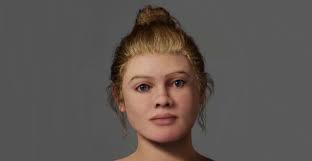
The story of the Beachy Head Woman has fascinated historians, scientists, and the public for years. Found on the cliffs of southern England, her remains sparked global debate about ancestry, identity, and diversity in Roman Britain.
For a long time, headlines described her as the “first Black Briton.” However, new DNA evidence tells a very different story. This article explains — in simple terms — who the Beachy Head Woman really was, how scientists got it wrong initially, and why this discovery still matters today.
Who Was the Beachy Head Woman?
The Beachy Head Woman, also called the Beachy Head Lady, was a Roman-era individual whose skeletal remains were discovered near Beachy Head in East Sussex, close to modern-day Eastbourne.
Based on archaeological dating:
- She lived around 1,800 years ago
- She was buried during the Roman occupation of Britain
- Her burial style matched local Roman customs
This already suggested she was part of everyday life in Roman Britain — not an outsider.
Why Did Scientists Think She Was Not From Britain?
Early studies relied heavily on skull shape analysis, a traditional method in physical anthropology. Based on cranial features, researchers suggested her ancestry may have been African.
At the time:
- DNA testing was limited
- Skull morphology was commonly used
- Media outlets amplified the most dramatic interpretation
This led to the widely shared claim that she was the “first Black Briton.”
However, skull analysis alone has serious limitations.
Skull Analysis vs DNA: What’s the Difference?
Skull Analysis (Older Method)
- Based on physical bone structure
- Influenced by nutrition and environment
- Can be misleading
- High margin of error
DNA Analysis (Modern Method)
- Uses genetic material
- Compares ancestry markers
- More accurate and reliable
- Widely accepted in modern archaeology
In short, DNA provides direct evidence, while skull analysis often relies on assumptions.
What Did the New DNA Study Reveal?
Recent ancient DNA research in England, led by scientists connected to the Natural History Museum, revealed something surprising:
👉 The Beachy Head Woman originated from southern Britain.
Key findings:
- Her genetic profile closely matched local populations
- No evidence of recent African ancestry
- Strong ties to southern England, likely near Eastbourne
This corrected years of misunderstanding.
Was the Beachy Head Woman From Eastbourne?
While scientists cannot identify her exact hometown, evidence suggests:
- She was local to southern England
- She likely lived and died in the same region
- Her burial practices matched nearby Roman communities
So while she may not have been born in Eastbourne itself, she was not a foreign arrival.
Does This Mean Roman Britain Was Not Diverse?
Not at all.
Roman Britain was:
- A multicultural society
- Home to soldiers, traders, and migrants
- Influenced by Europe, North Africa, and the Middle East
The mistake was overstating one individual’s story, not denying diversity itself.
This case reminds us that diversity existed, but each archaeological find must be interpreted carefully.
Why the “First Black Briton” Label Was a Problem
The label caused issues because:
- It simplified a complex scientific topic
- It relied on incomplete evidence
- It became politicized
Science evolves. When better tools become available, conclusions must be updated — even if headlines once said otherwise.
Why This Discovery Still Matters Today
The Beachy Head Woman’s story matters because it shows:
- How science corrects itself
- Why DNA evidence is crucial
- How myths can spread through media
- The importance of responsible archaeology
It also teaches us to separate identity debates from scientific facts.
What We Learn About Roman Britain From This Case
From this discovery, historians now better understand:
- Population continuity in southern England
- Burial customs in Roman Sussex
- Limits of early anthropological methods
Rather than reducing history to labels, this case encourages careful interpretation.
Common Myths About the Beachy Head Woman
❌ Myth 1: She was definitively African
✔ DNA shows she was local to Britain
❌ Myth 2: Roman Britain lacked diversity
✔ Diversity existed, but evidence must be specific
❌ Myth 3: Scientists lied
✔ Science evolved with better tools
Why Beginners Are Often Confused About This Topic
Many readers encounter:
- Conflicting headlines
- Old articles still ranking
- Social media summaries without updates
This article aims to clarify the confusion by explaining how conclusions changed — and why.
Final Thoughts: A Story of Better Science, Not Erased History
The Beachy Head Woman origin explained is not a story of erasure. It is a story of scientific progress.
With improved DNA techniques, archaeologists can now tell more accurate stories about the past — stories grounded in evidence, not assumptions.
Roman Britain remains a fascinating, diverse, and complex chapter of history. And the Beachy Head Woman continues to teach us — not because of myths, but because of what careful science reveals.
