
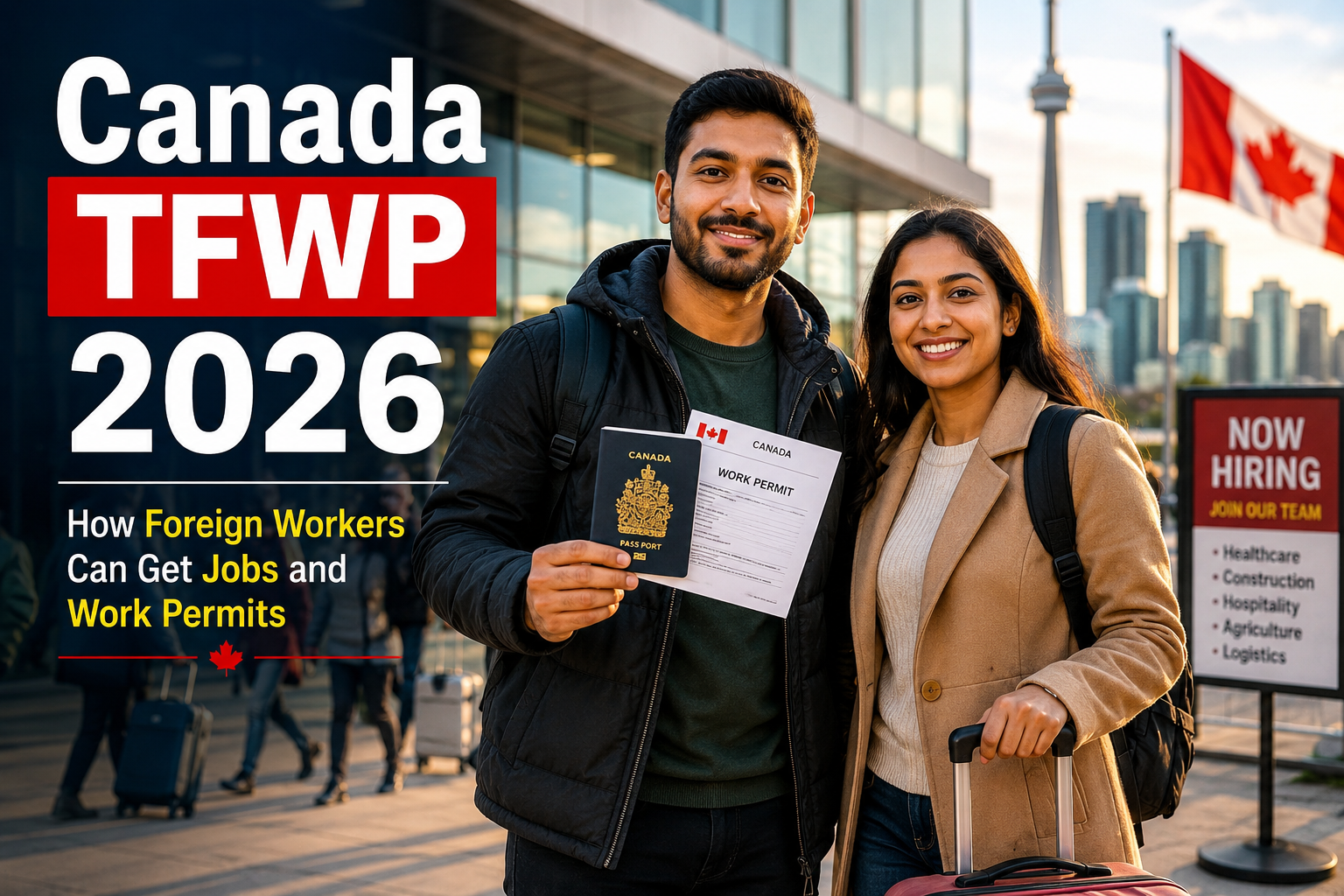
Canada continues to be one of the top destinations for international workers looking for better job opportunities, higher salaries, and a pathway to permanent residency. One of the most popular ways foreign nationals enter the Canadian labor market is through the Temporary Foreign Worker Program (TFWP).
In 2026, the Canada TFWP remains a major immigration and employment pathway for workers in industries facing labor shortages, including healthcare, agriculture, construction, hospitality, trucking, and technology. Thousands of employers across Canada rely on foreign talent to fill positions they cannot fill locally.
This comprehensive guide explains everything you need to know about the Canada TFWP in 2026, including eligibility requirements, LMIA rules, job categories, work permit applications, salaries, employer responsibilities, and pathways to permanent residency.
What Is the Temporary Foreign Worker Program (TFWP)?
The Temporary Foreign Worker Program (TFWP) is a Canadian government program that allows employers in Canada to hire foreign workers when qualified Canadian citizens or permanent residents are unavailable for the job.
The program is managed by the Government of Canada through:
- Employment and Social Development Canada (ESDC)
- Immigration, Refugees and Citizenship Canada (IRCC)
Under the TFWP, most employers must first obtain a document called a Labour Market Impact Assessment (LMIA) before hiring a foreign worker.
An LMIA proves that:
- No Canadian worker is available for the position
- Hiring a foreign worker will not negatively affect the Canadian labor market
Once the LMIA is approved, the foreign worker can apply for a Canadian work permit.
Why Canada Needs Foreign Workers in 2026
Canada faces major labor shortages due to:
- Aging population
- Low birth rates
- Economic growth
- Expansion in healthcare and construction sectors
- Demand for seasonal agricultural workers
Many industries struggle to recruit enough local workers. Because of this, Canada continues expanding immigration and temporary work programs.
Some provinces especially dependent on foreign workers include:
- Alberta
- Ontario
- British Columbia
- Saskatchewan
- Manitoba
- Nova Scotia
Main Streams Under the TFWP
The Temporary Foreign Worker Program includes several streams designed for different industries and worker categories.
| TFWP Stream | Purpose | Common Jobs |
|---|---|---|
| High-Wage Stream | Jobs above provincial wage median | Engineers, IT, managers |
| Low-Wage Stream | Jobs below wage median | Hospitality, retail |
| Agricultural Worker Stream | Farming and agriculture jobs | Farm workers, harvesters |
| Seasonal Agricultural Worker Program (SAWP) | Seasonal farm labor | Fruit pickers |
| Global Talent Stream | Fast-track skilled workers | Tech professionals |
| Caregiver Programs | Home support and childcare | Caregivers, nannies |
How the Canada TFWP Works
The TFWP process generally follows these steps:
Step 1: Canadian Employer Offers a Job
A Canadian employer identifies a labor shortage and decides to hire a foreign worker.
The employer may advertise the job online or use recruitment agencies.
Step 2: Employer Applies for LMIA
The employer applies for a Labour Market Impact Assessment (LMIA) through ESDC.
The government checks:
- Salary offered
- Working conditions
- Recruitment efforts
- Labor market impact
If approved, the employer receives:
- Positive LMIA
- LMIA number
Step 3: Worker Applies for Work Permit
The foreign worker submits:
- Job offer letter
- LMIA copy
- Passport
- Educational documents
- Police certificates
- Medical exam (if required)
Applications are submitted online or through visa application centers.
Step 4: Work Permit Approval
If approved, the worker receives:
- Port of Entry Letter
- Visa (if applicable)
- Work permit upon arrival in Canada
Who Is Eligible for the TFWP in 2026?
Eligibility depends on both the employer and the worker.
Worker Eligibility Requirements
To qualify, foreign workers usually need:
- Valid passport
- Job offer from Canadian employer
- Positive LMIA (in most cases)
- Proof of qualifications
- Relevant work experience
- Clean criminal record
- Good health
Some jobs also require:
- Language skills
- Trade certification
- Licensing
LMIA Explained
The LMIA is one of the most important parts of the TFWP.
What Is an LMIA?
A Labour Market Impact Assessment is a government approval allowing an employer to hire a foreign worker.
A positive LMIA means:
- Canada needs a foreign worker
- No Canadian is available for the role
Types of LMIA Streams
| LMIA Stream | Description |
|---|---|
| High-Wage LMIA | Jobs above provincial median wage |
| Low-Wage LMIA | Jobs below median wage |
| Dual Intent LMIA | Supports temporary work and PR |
| Agricultural LMIA | Farm-related work |
| Permanent Residence LMIA | Supports PR applications |
High-Demand TFWP Jobs in Canada 2026
Canada is expected to continue facing labor shortages in many sectors.
Healthcare Jobs
| Occupation | Average Salary |
|---|---|
| Registered Nurse | CAD 70,000–110,000 |
| Personal Support Worker | CAD 40,000–60,000 |
| Caregiver | CAD 35,000–55,000 |
Construction Jobs
| Occupation | Average Salary |
|---|---|
| Electrician | CAD 65,000–95,000 |
| Welder | CAD 55,000–85,000 |
| Carpenter | CAD 50,000–80,000 |
Transportation Jobs
| Occupation | Average Salary |
|---|---|
| Truck Driver | CAD 50,000–90,000 |
| Delivery Driver | CAD 40,000–65,000 |
Agriculture Jobs
| Occupation | Average Salary |
|---|---|
| Farm Worker | CAD 30,000–50,000 |
| Greenhouse Worker | CAD 32,000–48,000 |
Hospitality Jobs
| Occupation | Average Salary |
|---|---|
| Cook | CAD 38,000–60,000 |
| Hotel Staff | CAD 32,000–50,000 |
| Restaurant Supervisor | CAD 40,000–65,000 |
Best Provinces for TFWP Workers
Different provinces offer different opportunities.
| Province | Strong Industries |
|---|---|
| Ontario | Healthcare, IT, trucking |
| Alberta | Oil, construction, farming |
| British Columbia | Hospitality, tech |
| Saskatchewan | Agriculture, trades |
| Manitoba | Manufacturing, farming |
| Nova Scotia | Healthcare, seafood processing |
LMIA vs Open Work Permit
Many people confuse employer-sponsored permits with open work permits.
| Feature | LMIA Work Permit | Open Work Permit |
|—|—|
| Employer-specific | Yes | No |
| Requires job offer | Yes | Not always |
| LMIA needed | Usually yes | No |
| Can change employers | Limited | Yes |
| Common applicants | Foreign workers | Spouses, graduates |
Processing Times for TFWP in 2026
Processing times vary depending on:
- Country of application
- Job category
- LMIA stream
- Season
Estimated Timelines
| Stage | Estimated Time |
|---|---|
| LMIA processing | 2–12 weeks |
| Work permit processing | 4–20 weeks |
| Global Talent Stream | Around 2 weeks |
Global Talent Stream (Fast-Track Option)
The Global Talent Stream helps Canadian tech companies hire highly skilled workers quickly.
Benefits
- Faster processing
- Priority work permits
- Two-week application processing
- High salaries
Popular Tech Roles
- Software engineers
- AI specialists
- Cybersecurity analysts
- Cloud architects
Documents Required for Canada TFWP
Applicants usually need:
Personal Documents
- Passport
- Passport photos
- Birth certificate
Employment Documents
- Job offer letter
- LMIA copy
- Employment contract
Supporting Documents
- Educational certificates
- Resume/CV
- Work references
- Police clearance
- Medical exam
How to Find TFWP Jobs in Canada
Finding legitimate Canadian employers is crucial.
Best Ways to Find Jobs
1. Canadian Job Portals
Popular platforms include:
- Job Bank Canada
- Indeed Canada
- Workopolis
2. Recruitment Agencies
Some licensed agencies recruit foreign workers legally.
Always verify legitimacy before paying fees.
3. Provincial Nominee Programs
Some provinces connect employers with foreign workers through immigration streams.
Red Flags and Job Scams
Unfortunately, many fake immigration offers target foreign workers.
Warning Signs
- Employer asks for large upfront payments
- Fake LMIA promises
- No official contract
- Suspicious email addresses
- Guaranteed visa claims
Important Tip
In most cases, employers—not workers—pay LMIA fees.
Can TFWP Workers Bring Family Members?
Yes, in many cases.
Eligible family members may:
- Apply for visitor visas
- Study in Canada
- Receive open work permits
Spouses of skilled workers often qualify for open work permits.
Children can usually attend Canadian public schools.
Pathways From TFWP to Permanent Residency
Many foreign workers eventually become permanent residents.
Popular PR Pathways
| Program | Suitable For |
|---|---|
| Express Entry | Skilled workers |
| Provincial Nominee Program (PNP) | Provincial labor needs |
| Canadian Experience Class | Workers with Canadian experience |
| Atlantic Immigration Program | Atlantic Canada workers |
How Canadian Work Experience Helps PR
Canadian work experience improves immigration scores significantly.
Benefits include:
- More CRS points
- Better job opportunities
- Provincial nomination eligibility
- Easier integration
TFWP vs International Mobility Program (IMP)
These programs are different.
| Feature | TFWP | IMP |
|—|—|
| LMIA required | Usually yes | No |
| Goal | Fill labor shortages | Broader economic/cultural benefit |
| Employer-specific | Usually yes | Sometimes |
| Examples | Farm workers, truck drivers | IEC, intra-company transfer |
Worker Rights Under the TFWP
Foreign workers in Canada are protected by labor laws.
Workers have the right to:
- Fair wages
- Safe workplace
- Rest breaks
- Proper housing (some sectors)
- Protection from abuse
Employers cannot:
- Confiscate passports
- Force illegal work
- Threaten deportation unfairly
Common Challenges TFWP Workers Face
1. Limited Employer Flexibility
Most permits are employer-specific.
Changing jobs may require:
- New LMIA
- New permit
2. Housing Costs
Cities like Toronto and Vancouver can be expensive.
Workers should research:
- Rent
- Transportation
- Healthcare coverage
3. Cold Weather Adaptation
Canada’s winters can be challenging for newcomers from warmer climates.
Tips to Increase Your Chances of Approval
Improve Your Resume
Use Canadian resume formatting.
Include:
- Skills
- Certifications
- Work achievements
Gain Relevant Experience
Employers prefer candidates with:
- Industry experience
- English or French skills
- Certifications
Apply for In-Demand Occupations
Focus on sectors with labor shortages.
Avoid Immigration Fraud
Only use:
- Licensed consultants
- Authorized lawyers
- Verified employers
Cost of Applying for TFWP
Costs vary depending on location and visa requirements.
| Expense | Estimated Cost |
|---|---|
| Work permit fee | CAD 155 |
| Biometrics | CAD 85 |
| Medical exam | CAD 100–300 |
| Police certificate | Varies |
| Airfare | Varies |
Is Canada TFWP Worth It in 2026?
For many workers, the answer is yes.
Benefits include:
- Competitive salaries
- International work experience
- Opportunity to immigrate permanently
- Access to healthcare and education
- Better quality of life
However, workers should:
- Research employers carefully
- Understand permit restrictions
- Prepare financially before arrival
Frequently Asked Questions (FAQs)
What is the Canada TFWP?
The Temporary Foreign Worker Program allows Canadian employers to hire foreign nationals when local workers are unavailable.
Do I need an LMIA for TFWP?
In most cases, yes. The employer must receive a positive LMIA before hiring a foreign worker.
Can I get permanent residency through TFWP?
Yes. Many workers transition to permanent residency through Express Entry or Provincial Nominee Programs.
How long does a TFWP work permit last?
Most permits are valid for one to three years, depending on the job offer and LMIA.
Can I change employers in Canada?
Usually, you need a new work permit and LMIA to change employers.
Is IELTS required for TFWP?
Not always. Some jobs require proof of language ability, while others may not.
Which jobs are easiest to get through TFWP?
Common opportunities include:
- Truck driving
- Farming
- Hospitality
- Construction
- Caregiving
Can my spouse work in Canada?
In many cases, spouses of skilled workers may qualify for open work permits.
Final Thoughts
The Canada TFWP 2026 program continues to provide major opportunities for foreign workers seeking employment and a future in Canada. Whether you are a skilled professional, truck driver, farm worker, caregiver, or hospitality employee, the program can open doors to valuable international work experience and even permanent residency.
Success depends on understanding the process, finding legitimate employers, preparing strong applications, and choosing in-demand occupations. With labor shortages expected to continue across Canada, foreign workers will remain essential to the country’s economy in 2026 and beyond.
If you are serious about working in Canada, now is the perfect time to research employers, prepare your documents, and begin your TFWP journey.
