
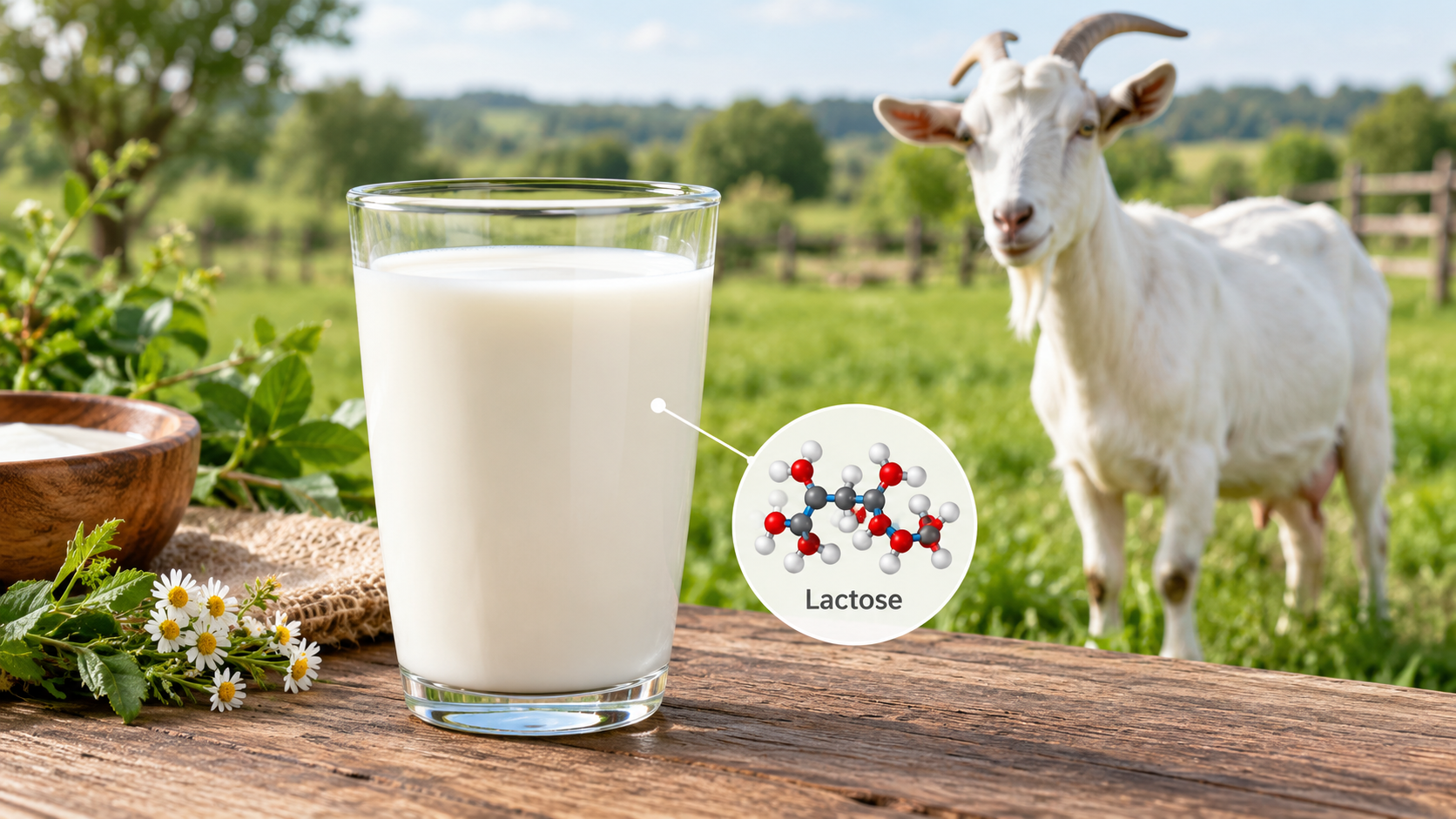
Yes, goat milk has lactose. Regular goat milk naturally contains lactose, the sugar found in milk from mammals. Goat milk may contain slightly less lactose than cow milk, but it is not lactose-free.
This means people with lactose intolerance may still experience symptoms after drinking goat milk. However, lactose tolerance varies from person to person, and some people can consume certain amounts of lactose without significant symptoms. (NIDDK)
If you are wondering whether goat milk is a suitable alternative to cow milk because of lactose intolerance, the key point is simple: switching to goat milk does not eliminate lactose from your diet.
Quick Answer: Does Goat Milk Have Lactose?
Yes. Goat milk contains lactose.
Lactose is a naturally occurring carbohydrate in milk. Goat milk, cow milk, sheep milk, and human milk all naturally contain lactose.
The amount of lactose in goat milk can vary depending on factors such as breed, diet, location, season, and stage of lactation. Research reviewing goat milk composition has found average lactose concentrations around 4.4%, while individual studies can report different values. (ScienceDirect)
So, regular goat milk should not be considered a lactose-free milk.
What Is Lactose?
Lactose is a naturally occurring sugar found in milk and dairy products.
Your small intestine normally produces an enzyme called lactase, which breaks lactose down so your body can digest it.
When the body does not produce enough lactase to digest the lactose consumed, some lactose remains undigested and can reach the large intestine. This can lead to digestive symptoms in people with lactose intolerance. (NIDDK)
Common symptoms of lactose intolerance include:
- Bloating
- Gas
- Diarrhea
- Abdominal pain
- Nausea
- Stomach rumbling
Symptoms can occur within a few hours after consuming lactose-containing foods or drinks, and the severity can depend partly on how much lactose is consumed. (NIDDK)
How Much Lactose Is in Goat Milk?
Goat milk typically contains around 4% to 5% lactose, although the exact amount varies.
A 2024 meta-analysis of goat milk composition found an average lactose concentration of approximately 4.42%, while a study comparing retail goat and cow milk found about 4.13 grams of lactose per 100 grams of goat milk. (ScienceDirect)
For comparison, the retail-milk study found approximately 4.52 grams of lactose per 100 grams of cow milk. In that study, goat milk had about 8.7% less lactose than cow milk. (PubMed Central (PMC))
| Milk | Approximate lactose content |
|---|---|
| Goat milk | About 4–5% |
| Cow milk | About 4–5% |
| Sheep milk | Varies |
| Lactose-free milk | Lactose substantially broken down/removed |
These figures are averages rather than fixed values. Milk composition can vary by animal, breed, season, diet, and other factors. (ScienceDirect)
Does Goat Milk Have Less Lactose Than Cow Milk?
Usually, goat milk has slightly less lactose than cow milk, but the difference is relatively small.
For example, one study of retail milk found approximately:
- Goat milk: 4.13 g lactose per 100 g
- Cow milk: 4.52 g lactose per 100 g (PubMed Central (PMC))
However, this does not mean goat milk is a low-lactose milk.
Both types contain substantial amounts of lactose, and the exact difference can vary between products.
Therefore, if you need to avoid lactose, regular goat milk should not be treated as a lactose-free alternative to cow milk.
Is Goat Milk Lactose-Free?
No. Regular goat milk is not lactose-free.
This is one of the most important points to understand.
The word “goat” describes the source of the milk, not its lactose content. Since goats are mammals, their milk naturally contains lactose.
If a goat milk product is specifically labeled “lactose-free,” that is different from ordinary goat milk. The product has undergone processing intended to greatly reduce or break down the lactose.
Always check the product label if you need to strictly limit lactose.
Can People With Lactose Intolerance Drink Goat Milk?
Some people with lactose intolerance may be able to drink small or moderate amounts of goat milk, while others may experience symptoms.
Lactose intolerance is not necessarily an all-or-nothing condition. According to the National Institute of Diabetes and Digestive and Kidney Diseases (NIDDK), many people with lactose intolerance can tolerate some lactose, although the amount varies from person to person. (NIDDK)
Some people may find that they tolerate lactose better when they:
- Consume smaller amounts at a time
- Drink milk with a meal
- Gradually introduce lactose-containing foods
- Choose yogurt or certain hard cheeses, which can contain less lactose
- Use lactose-free or lactose-reduced products
NIDDK notes that many people with lactose intolerance can tolerate around 12 grams of lactose, roughly the amount found in one cup of milk, without symptoms or with only mild symptoms, although individual tolerance differs. (NIDDK)
This does not mean everyone with lactose intolerance can safely drink a cup of goat milk. Your individual response matters.
Is Goat Milk Easier to Digest Than Cow Milk?
Some people report that goat milk feels easier to digest than cow milk.
Goat milk has a different composition from cow milk, including differences in its proteins and fat structure. These differences may influence how some people experience digestion.
However, it is important not to confuse “easier to digest” with “lactose-free.”
Goat milk still contains lactose.
Therefore, someone who has difficulty digesting lactose can still experience symptoms after drinking goat milk.
Why Do Some People Tolerate Goat Milk Better?
There are several possible reasons why an individual might tolerate goat milk differently from cow milk.
One factor is that goat milk has a different overall composition from cow milk. Research has documented differences in protein, casein, fat, and lactose concentrations between the two milks. (PubMed Central (PMC))
However, it would be inaccurate to say that goat milk is automatically easier for everyone with lactose intolerance.
Individual tolerance is more important than assuming that goat milk will work for everyone.
Does Goat Milk Cause Bloating and Gas?
It can.
Because goat milk contains lactose, people who have difficulty digesting lactose may experience:
- Bloating
- Gas
- Abdominal discomfort
- Diarrhea
- Nausea
These are recognized symptoms of lactose intolerance. (NIDDK)
However, digestive symptoms after drinking goat milk do not automatically prove that lactose is the cause.
Other digestive conditions can produce similar symptoms. NIDDK notes that conditions such as irritable bowel syndrome, celiac disease, inflammatory bowel disease, and small-intestinal bacterial overgrowth can cause symptoms similar to lactose intolerance. (NIDDK)
If symptoms are persistent, severe, or difficult to explain, a healthcare professional can help determine the cause.
Goat Milk vs. Cow Milk: Lactose Comparison
Both goat milk and cow milk naturally contain lactose.
| Question | Goat Milk | Cow Milk |
|---|---|---|
| Contains lactose? | Yes | Yes |
| Naturally lactose-free? | No | No |
| Typical lactose concentration | About 4–5% | About 4–5% |
| Can cause lactose-intolerance symptoms? | Yes | Yes |
| May be tolerated differently by individuals? | Yes | Yes |
| Lactose-free versions available? | Depends on product | Widely available |
A retail-milk study found slightly less lactose in goat milk than cow milk, but the difference was not large enough to make goat milk a lactose-free or very-low-lactose beverage. (PubMed Central (PMC))
Does Goat Cheese Have Lactose?
Goat cheese can contain lactose, but the amount varies depending on the type of cheese and how it is produced.
During cheese production, some lactose is removed with the whey, and fermentation can further reduce the amount present.
Some aged cheeses contain very little lactose compared with milk.
Fresh goat cheese may contain more lactose than certain aged cheeses.
If you have significant lactose intolerance, check the product’s nutrition and ingredient information rather than assuming all goat cheese is low in lactose.
Does Goat Yogurt Have Lactose?
Yes, goat yogurt can contain lactose.
However, fermentation can reduce the amount of lactose in yogurt. This is one reason some people with lactose intolerance find yogurt easier to tolerate than milk.
The amount remaining depends on the product and how it was made.
If you are particularly sensitive to lactose, a product specifically labeled lactose-free may be a more predictable choice.
Is Lactose Intolerance the Same as a Milk Allergy?
No. Lactose intolerance and milk allergy are different conditions.
Lactose intolerance involves difficulty digesting lactose, the sugar naturally found in milk.
A milk allergy involves an immune-system reaction to milk proteins. (NIDDK)
This distinction matters when considering goat milk.
Someone who cannot tolerate lactose may potentially tolerate a certain amount of goat milk depending on their individual lactose tolerance.
But someone with a milk-protein allergy should not assume goat milk is automatically safe simply because it comes from a goat.
If you have a diagnosed milk allergy, talk with a healthcare professional before trying goat milk.
Is There Lactose-Free Goat Milk?
Lactose-free goat milk products may be available depending on where you live and which brands are sold in your market.
Regular goat milk contains lactose, whereas a product labeled lactose-free has been processed to break down or remove most of the lactose.
If your goal is to reduce lactose exposure, check the label carefully.
Do not assume that:
Goat milk = lactose-free
The correct distinction is:
Regular goat milk contains lactose.
Lactose-free goat milk is specially processed to reduce or break down lactose.
Lactose-free and lactose-reduced milk products can be useful options for people who need to limit lactose. (NIDDK)
What Can You Drink If You Cannot Tolerate Goat Milk?
If regular goat milk causes lactose-related symptoms, several alternatives may be available.
Lactose-free dairy milk
Lactose-free cow milk has the nutritional characteristics of dairy milk while having the lactose broken down during processing.
Lactose-free goat milk
If available, specifically labeled lactose-free goat milk may be another option.
Plant-based milk
Depending on your nutritional requirements, alternatives can include:
- Soy milk
- Almond milk
- Oat milk
- Rice milk
- Coconut-based beverages
Their nutritional profiles differ, so check labels for protein, calcium, vitamin D, and added sugars.
How Much Goat Milk Can Someone With Lactose Intolerance Drink?
There is no single amount that works for everyone.
Lactose tolerance varies considerably. Some people can consume a moderate amount of lactose with few symptoms, while others may need to limit it more substantially. (NIDDK)
If you already know you have lactose intolerance, you can discuss an appropriate dietary approach with a doctor or registered dietitian.
Rather than assuming goat milk is safe because it contains slightly less lactose than cow milk, pay attention to your individual response and the amount consumed.
How Is Lactose Intolerance Diagnosed?
Digestive symptoms alone do not always establish that someone has lactose intolerance.
A healthcare professional may consider:
- Your symptoms
- Your medical history
- Your eating habits
- Your response to reducing lactose
- Other possible causes of digestive symptoms
Testing may also be used when appropriate. NIDDK notes that conditions including celiac disease, inflammatory bowel disease, and irritable bowel syndrome can produce symptoms that resemble lactose intolerance. (NIDDK)
Frequently Asked Questions
Does goat milk have lactose?
Yes. Goat milk naturally contains lactose. Regular goat milk is not lactose-free.
How much lactose is in goat milk?
Goat milk generally contains around 4% to 5% lactose, although the exact amount varies. A large review found an average of about 4.42%, while a retail-milk study measured about 4.13 g per 100 g. (ScienceDirect)
Does goat milk have less lactose than cow milk?
Usually, goat milk contains slightly less lactose than cow milk, but the difference is relatively small. Both contain substantial amounts of lactose. (PubMed Central (PMC))
Is goat milk lactose-free?
No. Regular goat milk contains lactose. Only products specifically processed and labeled as lactose-free should be considered lactose-free.
Can lactose-intolerant people drink goat milk?
Some people with lactose intolerance may tolerate small amounts of goat milk, while others may develop symptoms. Individual lactose tolerance varies. (NIDDK)
Is goat milk easier to digest than cow milk?
Some people find goat milk easier to digest, but this does not mean it is lactose-free. Goat milk still contains lactose.
Does goat milk cause gas?
It can cause gas in people who have difficulty digesting lactose. Gas is one of the common symptoms associated with lactose intolerance. (NIDDK)
Does goat milk cause bloating?
Goat milk can contribute to bloating if you have lactose intolerance. However, bloating can have many causes, so it should not automatically be attributed to lactose.
Does goat cheese have lactose?
Goat cheese can contain lactose, although some cheeses, particularly aged varieties, contain much less lactose than milk.
Does goat yogurt have lactose?
Yes, goat yogurt can contain lactose. Fermentation can reduce its lactose content, but the amount varies between products.
Is goat milk dairy?
Yes. Goat milk is a dairy product because it comes from a mammal. It naturally contains lactose and milk proteins.
Can people with a milk allergy drink goat milk?
Not necessarily. Goat milk contains milk proteins and can cause allergic reactions in people with milk allergies. Lactose intolerance and milk allergy are different conditions. (NIDDK)
The Bottom Line
Does goat milk have lactose? Yes.
Regular goat milk naturally contains lactose, generally around 4% to 5%, although the exact amount varies between milk samples and production conditions. Research shows that goat milk can contain slightly less lactose than cow milk, but the difference is not enough to make ordinary goat milk lactose-free. (ScienceDirect)
If you have lactose intolerance, you may still be able to consume some goat milk because lactose tolerance varies from person to person. However, goat milk can cause bloating, gas, diarrhea, or abdominal discomfort in people who do not digest lactose well. (NIDDK)
If you need to strictly avoid lactose, choose products specifically labeled lactose-free rather than assuming that goat milk is naturally lactose-free.
In short: goat milk contains lactose, but some people may tolerate it differently from cow milk.
