
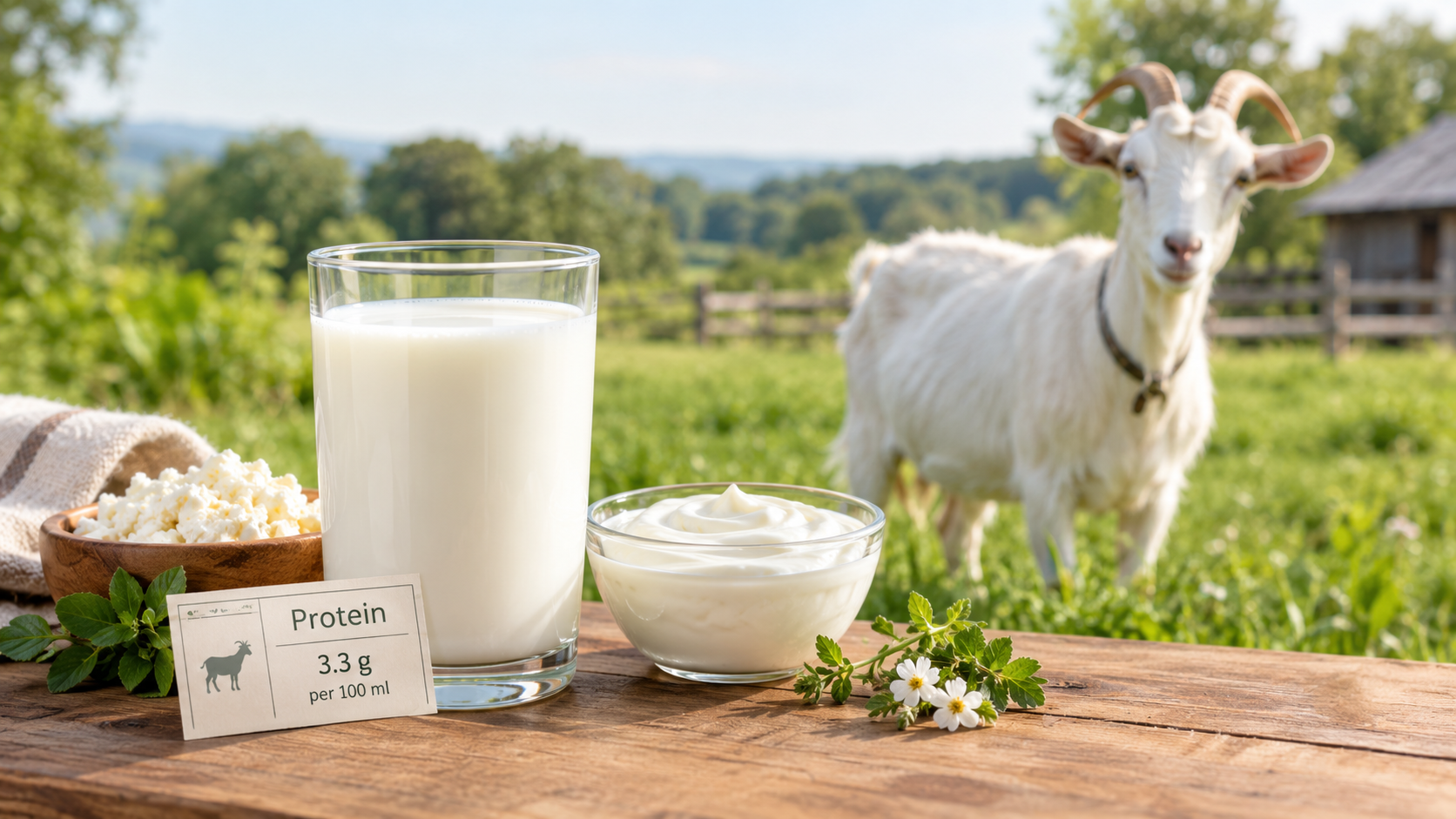
Goat milk protein is a high-quality source of dietary protein that provides essential amino acids needed for muscle maintenance, tissue repair, enzymes, hormones, and other important functions in the body.
But how much protein does goat milk actually contain? Is goat milk protein complete? Is it easier to digest than cow milk protein? And how does ordinary goat milk compare with goat milk protein powder?
A cup of whole goat milk typically provides about 8–9 grams of protein, making it a useful source of complete protein. Goat milk protein contains both casein and whey proteins, along with all nine essential amino acids.
This guide explains what goat milk protein is, how much it contains, its amino acid profile, how it compares with cow milk protein, and what to know about goat milk protein powder.
How Much Protein Is in Goat Milk?
A typical 1-cup serving (about 240–244 grams) of goat milk contains approximately 8–9 grams of protein.
The exact amount can vary depending on the goat breed, feeding conditions, processing method, and the particular product.
Approximate amounts include:
| Serving size | Approximate protein |
|---|---|
| 100 g goat milk | ~3–4 g |
| ¼ cup | ~2 g |
| ½ cup | ~4 g |
| 1 cup | ~8–9 g |
| 1 liter | ~30–36 g |
These figures apply to liquid goat milk, not concentrated goat milk protein powder.
That distinction is important because removing much of the water from milk dramatically increases the protein concentration.
What Is Goat Milk Protein?
Goat milk protein refers to the proteins naturally present in goat milk.
The two major groups are:
- Casein
- Whey protein
Casein represents most of the protein in milk, while whey makes up a smaller portion.
Goat milk therefore provides a combination of proteins with different digestion characteristics rather than being a single type of protein.
What Types of Protein Are in Goat Milk?
Casein
Casein is the major protein component of goat milk.
Goat milk contains several types of casein, including:
- Alpha-casein
- Beta-casein
- Kappa-casein
Casein is relatively slow to digest compared with whey and provides a sustained supply of amino acids during digestion.
Whey Protein
Whey is the soluble portion of milk protein.
Goat milk whey contains proteins such as:
- Beta-lactoglobulin
- Alpha-lactalbumin
- Immunoglobulins
- Lactoferrin
Whey protein is generally digested more quickly than casein.
This means goat milk naturally provides both relatively fast- and slower-digesting proteins.
Is Goat Milk Protein a Complete Protein?
Yes. Goat milk protein is a complete protein.
A complete protein contains all nine essential amino acids that the body cannot produce on its own in sufficient amounts.
These are:
- Histidine
- Isoleucine
- Leucine
- Lysine
- Methionine
- Phenylalanine
- Threonine
- Tryptophan
- Valine
Because goat milk provides these essential amino acids, its protein can contribute to normal muscle maintenance, tissue repair, and other processes that require dietary amino acids.
What Amino Acids Are in Goat Milk Protein?
Goat milk protein contains a broad range of amino acids.
The essential amino acids include:
- Histidine
- Isoleucine
- Leucine
- Lysine
- Methionine
- Phenylalanine
- Threonine
- Tryptophan
- Valine
It also contains nonessential and conditionally essential amino acids such as:
- Alanine
- Arginine
- Aspartic acid
- Cysteine
- Glutamic acid
- Glycine
- Proline
- Serine
- Tyrosine
The precise amino acid amounts depend on the composition of the goat milk or goat milk protein product.
Goat Milk Protein and Leucine
Leucine is one of the branched-chain amino acids (BCAAs) found in goat milk protein.
Leucine is particularly relevant to sports nutrition because it plays an important role in signaling pathways involved in muscle protein synthesis.
Goat milk protein also contains the other two BCAAs:
- Isoleucine
- Valine
Together, these are known as the branched-chain amino acids (BCAAs).
However, the amount of leucine in ordinary liquid goat milk is much lower than in a concentrated goat milk protein powder because liquid milk contains substantially more water.
Goat Milk Protein vs Goat Milk Protein Powder
These terms are related but should not be confused.
Goat milk is a liquid food containing water, protein, fat, lactose, vitamins, minerals, and other components.
Goat milk protein powder is a concentrated product in which much of the water has been removed and the protein content is therefore much higher.
For example, the goat milk protein product in the source you provided lists 80 grams of protein per 100 grams of powder and 24 grams per 30-gram serving. Its ingredient is listed as goat’s milk protein concentrate.
This should not be interpreted as meaning that ordinary goat milk contains 80 grams of protein per 100 grams.
Why the Difference Matters
If you search for goat milk protein, you may encounter information about both:
- Protein naturally found in liquid goat milk
- Concentrated goat milk protein products
Always check the serving size and nutrition label before comparing protein amounts.
How Much Protein Is in Goat Milk Protein Powder?
Goat milk protein powders can contain substantially more protein per serving than ordinary goat milk because they are concentrated.
The product in the uploaded source provides:
- 80 g protein per 100 g
- 24 g protein per 30 g serving
- 7 g leucine per 100 g
- 16.1 g BCAAs per 100 g
- 36.1 g essential amino acids per 100 g
These numbers are product-specific, so they should not be treated as universal nutritional values for every goat milk protein powder.
When comparing products, check the nutrition facts rather than relying on the product name alone.
Goat Milk Protein vs Cow Milk Protein
Goat milk and cow milk both provide high-quality complete protein.
A cup of either generally provides a similar amount of protein, although the exact nutritional composition varies.
| Feature | Goat milk protein | Cow milk protein |
|---|---|---|
| Complete protein | Yes | Yes |
| Casein | Yes | Yes |
| Whey | Yes | Yes |
| Essential amino acids | Yes | Yes |
| Leucine | Yes | Yes |
| Lactose | Yes | Yes |
The important differences are not simply the total grams of protein.
The types and proportions of individual proteins can differ between goat and cow milk, which may influence how the proteins behave during digestion.
Is Goat Milk Protein Easier to Digest?
Some people find goat milk easier to tolerate than cow milk, but it is not accurate to assume that goat milk protein is automatically easier for everyone to digest.
Differences in protein composition and the way milk forms a curd during digestion may contribute to differences in individual tolerance.
The uploaded product source describes goat milk protein as an easily digestible alternative to cow’s milk protein, but this is presented in the context of that product and should not be interpreted as a guarantee for every person.
Digestive tolerance is individual.
Someone who experiences discomfort with cow milk may tolerate goat milk better, while another person may experience similar symptoms with both.
Does Goat Milk Protein Contain Lactose?
The protein itself is not lactose.
However, ordinary goat milk naturally contains lactose, which is the primary sugar in milk.
Therefore:
Goat milk is not lactose-free.
This distinction is important because someone looking for goat milk protein because of lactose intolerance should not assume that goat milk will automatically be suitable.
Some people report tolerating goat milk better than cow milk, but tolerance varies.
The product source also notes that goat milk protein products may contain lactose and describes goat milk as lower in lactose than cow milk, while recommending medical advice for severe intolerance.
Is Goat Milk Protein Good for Muscle Growth?
Goat milk protein can contribute to a diet designed to support muscle growth.
It provides:
- Complete protein
- Essential amino acids
- Leucine
- Isoleucine
- Valine
- Other amino acids
Protein provides the amino acids needed for muscle repair and maintenance, while resistance training provides the stimulus for muscle adaptation.
Therefore, goat milk can be one source of protein in a muscle-building diet.
However, drinking goat milk by itself does not cause muscle growth.
Muscle development depends on factors including:
- Resistance training
- Total daily protein intake
- Energy intake
- Recovery
- Sleep
- Training consistency
Goat Milk Protein and Muscle Recovery
Goat milk protein can also be consumed as part of a post-workout meal or snack.
The protein provides amino acids that the body can use during recovery.
A concentrated goat milk protein powder can provide substantially more protein in a smaller serving than ordinary goat milk.
The product source recommends its goat milk protein powder around exercise, including after strength training, and describes it as providing protein for regeneration and muscle building.
Those are product-use recommendations rather than evidence that one specific product is necessary for muscle recovery.
Is Goat Milk Protein Good for Adults?
For adults who tolerate dairy, goat milk can be a nutritious source of complete protein.
It can contribute to daily protein intake while also providing other nutrients naturally found in milk.
Goat milk can be consumed:
- On its own
- With breakfast
- In smoothies
- With cereal
- In porridge
- In cooking and baking
- As yogurt or cheese
Goat milk protein powder can also be incorporated into smoothies, yogurt, porridge, and baked foods.
Is Goat Milk Protein Good for Children?
Goat milk contains protein, but plain goat milk should not automatically be used as a replacement for breast milk or infant formula.
Infants have specific nutritional requirements that ordinary animal milk does not necessarily meet.
Parents should follow appropriate pediatric guidance when deciding what milk or formula to give an infant.
For older children, goat milk can be part of an age-appropriate diet when dairy is tolerated.
Goat Milk Protein and Milk Allergy
Goat milk should not automatically be considered a safe alternative for someone with a cow’s milk protein allergy.
Some proteins in goat milk are sufficiently similar to cow’s milk proteins that people with cow’s milk protein allergy may also react to goat milk.
Anyone with a diagnosed milk allergy should seek appropriate medical guidance before switching from cow milk to goat milk.
This is particularly important for infants and children.
Goat Milk Protein vs Goat Whey Protein
These are not exactly the same product.
Goat milk protein contains the complete protein mixture from goat milk, including casein and whey proteins.
Goat whey protein is produced from the whey portion of goat milk.
The uploaded source describes goat milk protein as approximately 80% casein and 20% whey, while describing goat whey protein as the protein obtained specifically from the whey portion.
Because whey is generally digested more quickly than casein, goat whey protein may be positioned differently from a whole goat milk protein product.
However, the exact nutritional properties depend on how each product is processed.
Goat Milk Protein for Weight Management
Goat milk protein can be included in a balanced diet for someone managing their weight.
Protein is an important nutrient for maintaining lean tissue, and protein-containing foods can contribute to fullness.
However, goat milk is not inherently a weight-loss food.
Total calorie intake, portion sizes, physical activity, and overall dietary pattern all matter.
If calories are a concern, compare the nutrition labels of whole, reduced-fat, and protein-concentrated goat milk products.
Nutritional Value of Goat Milk Protein
Goat milk protein is only one part of goat milk’s nutritional profile.
Liquid goat milk also provides nutrients such as:
- Calcium
- Phosphorus
- Potassium
- Vitamin B12
- Fat
- Lactose
- Other vitamins and minerals
This makes goat milk different from an isolated protein supplement.
A goat milk protein concentrate, on the other hand, is designed to provide a much more concentrated amount of protein.
For example, the product information in the uploaded source lists 375 calories and 80 grams of protein per 100 grams of its goat milk protein concentrate.
Benefits of Goat Milk Protein
1. It provides complete protein
Goat milk contains all nine essential amino acids.
2. It contributes to muscle maintenance
Adequate dietary protein helps the body maintain muscle tissue.
3. It provides essential amino acids
Goat milk protein supplies amino acids that the body needs but cannot produce in sufficient quantities.
4. It contains BCAAs
Goat milk protein contains leucine, isoleucine, and valine.
5. It can be used in different foods
Goat milk and goat milk protein products can be incorporated into drinks, smoothies, yogurt, porridge, and baked foods.
6. Protein can be concentrated
Goat milk protein powder provides considerably more protein per serving than liquid goat milk because the protein has been concentrated.
Potential Downsides of Goat Milk Protein
Goat milk protein may not be suitable for everyone.
Lactose
Goat milk contains lactose, so people with lactose intolerance may still experience symptoms.
Milk allergy
People allergic to cow’s milk protein may also react to goat milk proteins.
Calories
Whole goat milk contains fat and calories, so portion size matters for people monitoring calorie intake.
Product differences
Goat milk protein powders can differ significantly in protein concentration, ingredients, sugar, fat, and calories.
Infants
Plain goat milk should not be treated as an automatic substitute for breast milk or infant formula.
How to Choose a Goat Milk Protein Powder
If you’re specifically looking for a goat milk protein powder, don’t judge a product only by its name.
Check:
- Protein per serving
- Serving size
- Protein per 100 g
- Amino acid profile
- Leucine content
- Added sugar
- Total carbohydrates
- Fat
- Ingredients
- Allergens
- Lactose content
- Flavorings and sweeteners
For example, the product in the uploaded source lists goat’s milk protein concentrate as its ingredient and provides 24 grams of protein in a 30-gram serving.
Frequently Asked Questions About Goat Milk Protein
How much protein is in goat milk?
A cup of goat milk generally provides about 8–9 grams of protein, although the exact amount varies by product.
Is goat milk protein complete?
Yes. Goat milk protein contains all nine essential amino acids and is considered a complete protein.
Is goat milk high in protein?
Goat milk is a good source of protein, but it is not exceptionally high in protein compared with concentrated protein foods or protein powders.
Does goat milk have more protein than cow milk?
Generally, goat milk and cow milk contain similar amounts of protein per cup. Their individual protein compositions can differ.
Is goat milk protein good for muscle building?
Yes. Goat milk provides complete protein and essential amino acids, including leucine, which can contribute to a diet designed to support muscle growth and maintenance.
Is goat milk protein easier to digest than cow milk protein?
Some people may find goat milk easier to tolerate, but individual responses vary. Goat milk is not automatically easier to digest for everyone.
Does goat milk protein contain lactose?
The protein itself is different from lactose, but ordinary goat milk contains lactose. Therefore, goat milk is not lactose-free.
How much protein is in goat milk protein powder?
The amount varies by product. The goat milk protein concentrate in the uploaded source contains 24 grams of protein per 30-gram serving, or 80 grams per 100 grams.
What is the difference between goat milk protein and goat whey protein?
Goat milk protein contains both casein and whey proteins, whereas goat whey protein comes specifically from the whey portion of goat milk.
Can babies drink goat milk for protein?
Plain goat milk should not be used as a replacement for breast milk or infant formula during infancy. Babies have specific nutritional requirements that ordinary goat milk does not adequately meet.
Is goat milk protein good for adults?
For adults who tolerate dairy, goat milk can be a convenient source of complete protein and other nutrients.
Is goat milk protein suitable for people with milk allergies?
Not necessarily. People with cow’s milk protein allergy may also react to goat milk proteins.
Goat Milk Protein: Bottom Line
Goat milk protein is a complete, high-quality protein that provides all nine essential amino acids. A cup of liquid goat milk generally contains about 8–9 grams of protein.
Goat milk contains both casein and whey proteins, while concentrated goat milk protein powders can provide substantially more protein per serving.
Goat milk protein can contribute to muscle maintenance, tissue repair, and overall protein intake. It also contains amino acids such as leucine, isoleucine, and valine.
However, goat milk is not lactose-free, and people with cow’s milk protein allergies may also react to goat milk. Plain goat milk should also not be used as a replacement for breast milk or infant formula for infants.
If your goal is simply to increase dietary protein, liquid goat milk can contribute to your daily intake. If you want a much more concentrated source of goat milk protein, a goat milk protein powder provides considerably more protein in a smaller serving.
