
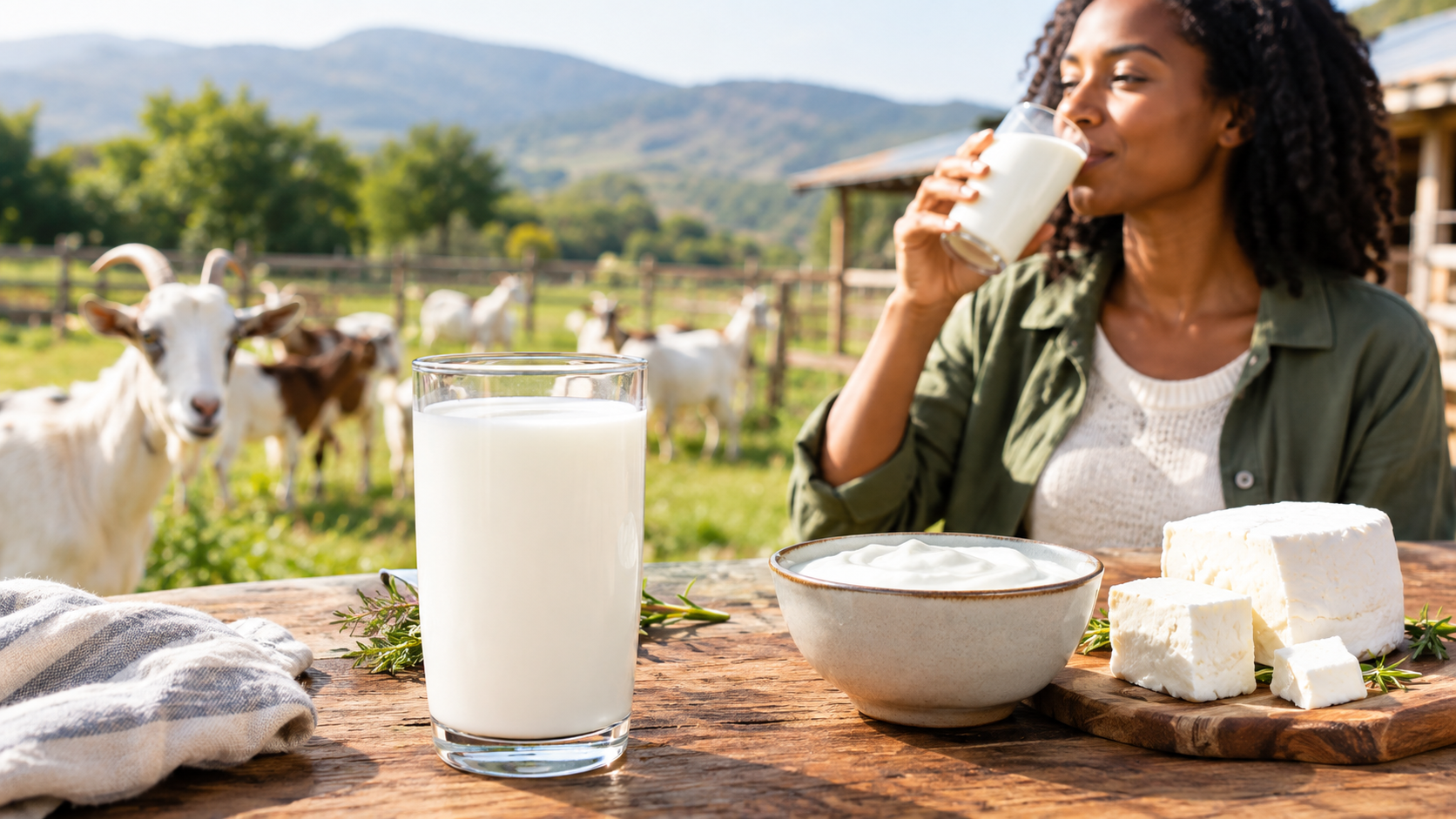
Goat milk for adults can be a nutritious alternative to cow milk and can be included in a balanced diet. It provides protein, fat, calcium, phosphorus, potassium, and other nutrients that adults need for maintaining bones, muscles, and overall health.
Some adults choose goat milk because they prefer its flavor or find it easier to digest than regular cow milk. However, goat milk is not automatically suitable for everyone, particularly people with a milk allergy or those who need to limit certain nutrients.
This guide explains the nutrition, potential benefits, digestion, possible disadvantages, and practical ways adults can use goat milk.
What Is Goat Milk?
Goat milk is milk produced by dairy goats. Like cow milk, it naturally contains protein, fat, carbohydrates, vitamins, and minerals.
It can be consumed as a beverage or used to make products such as:
- Yogurt
- Cheese
- Kefir
- Milk-based smoothies
- Sauces
- Baked foods
- Coffee and tea drinks
Goat milk is nutritionally similar to cow milk, but there are differences in its fat structure, protein composition, and mineral content.
Is Goat Milk Good for Adults?
Yes. Goat milk can be a nutritious choice for adults when consumed as part of a balanced diet.
It can provide several important nutrients, including:
- Protein for muscle maintenance and repair
- Calcium for bones and teeth
- Phosphorus for bones and energy metabolism
- Potassium for normal muscle and nerve function
- Vitamin B12 for red blood cells and nervous-system function
- Riboflavin (vitamin B2) for energy metabolism
- Fat for energy and absorption of fat-soluble vitamins
Whether goat milk is a good choice for a particular adult depends on individual dietary needs, allergies, lactose tolerance, calorie requirements, and personal preferences.
Goat Milk Nutrition for Adults
The exact nutritional value depends on the breed of goat, processing method, and product. A typical serving of whole goat milk provides a combination of protein, fat, carbohydrates, and minerals.
Key nutrients in goat milk
| Nutrient | Why adults need it |
|---|---|
| Protein | Helps maintain muscles and other tissues |
| Calcium | Supports bones and teeth |
| Phosphorus | Supports bones and normal cellular functions |
| Potassium | Helps with normal muscle and nerve function |
| Vitamin B12 | Important for blood and nervous-system function |
| Riboflavin | Helps the body process nutrients for energy |
| Fat | Provides energy and helps absorb certain vitamins |
| Lactose | Natural carbohydrate found in milk |
The nutrition label on the specific goat milk product you buy is the best source for its exact calorie, protein, fat, carbohydrate, vitamin, and mineral amounts.
Potential Benefits of Goat Milk for Adults
1. It Provides High-Quality Protein
Goat milk contains complete dairy protein, providing essential amino acids that the body cannot make on its own.
For adults, adequate protein is important for maintaining muscle mass, repairing tissues, and supporting normal body functions.
This can be particularly relevant as people get older because maintaining muscle becomes increasingly important.
2. It Provides Calcium for Bone Health
Calcium is one of the major nutrients found in milk.
Adults need calcium throughout life because the skeleton is continuously being remodeled. Getting enough calcium through food can help support normal bones and teeth.
Goat milk can therefore contribute to an adult’s daily calcium intake.
3. It Contains Phosphorus
Goat milk also provides phosphorus.
Phosphorus works together with calcium in maintaining bones and teeth and also participates in several important processes in the body.
4. It Provides Vitamin B12
Vitamin B12 is important for normal red blood-cell formation and nervous-system function.
Because goat milk is a dairy food, it naturally contributes vitamin B12 to the diet.
However, the amount can vary among products, so people who specifically need more B12 should consider the nutritional information on the product they consume.
5. It Provides Riboflavin
Goat milk contains riboflavin, also known as vitamin B2.
Riboflavin helps the body convert nutrients into usable energy and contributes to normal cellular function.
6. It Can Be Part of a Balanced Diet
Adults do not need goat milk specifically to be healthy. However, it can be one convenient way to obtain dairy nutrients.
A balanced diet can include goat milk alongside foods such as:
- Vegetables
- Fruits
- Whole grains
- Beans and legumes
- Eggs
- Fish
- Meat or other protein sources
- Nuts and seeds
Is Goat Milk Easier to Digest for Adults?
Some adults report that goat milk feels easier to digest than cow milk. There are characteristics of goat milk that may contribute to differences in digestion, including differences in its fat globules and protein composition.
However, goat milk is not lactose-free.
This distinction is important.
If an adult has lactose intolerance, goat milk may still cause symptoms such as:
- Bloating
- Gas
- Abdominal discomfort
- Diarrhea
Some people may tolerate goat milk better than cow milk, while others may not notice any difference.
If you are specifically looking for a dairy product because of lactose intolerance, lactose-free milk or other lactose-free dairy products may be more appropriate.
Can Adults With Lactose Intolerance Drink Goat Milk?
It depends on the individual.
Goat milk naturally contains lactose, so it is not a naturally lactose-free milk.
People with mild lactose intolerance may sometimes tolerate small amounts of dairy, particularly when consumed with other foods. Others may experience symptoms even after relatively small amounts.
If goat milk consistently causes digestive symptoms, switching to lactose-free products may be worth considering.
Goat Milk vs. Cow Milk for Adults
Goat milk and cow milk are both nutrient-rich dairy foods.
| Feature | Goat Milk | Cow Milk |
|---|---|---|
| Protein | Provides dairy protein | Provides dairy protein |
| Calcium | Good source | Good source |
| Lactose | Contains lactose | Contains lactose |
| Vitamin B12 | Provides B12 | Provides B12 |
| Fat | Naturally contains milk fat | Naturally contains milk fat |
| Taste | Often described as tangier or more distinctive | Generally milder |
| Digestion | Some people find it easier to tolerate | Well tolerated by many people |
| Allergy considerations | Can still cause milk-allergy reactions | Common cause of milk allergy |
Neither milk is automatically better for every adult. The better choice depends on nutrition, tolerance, allergies, taste, availability, and dietary needs.
Does Goat Milk Have Less Lactose Than Cow Milk?
Goat milk generally contains slightly less lactose than cow milk, but the difference is not large enough to make goat milk lactose-free.
Therefore, adults who cannot tolerate lactose should not assume that goat milk will be symptom-free.
The important point is:
Goat milk contains lactose, just like cow milk.
Can Goat Milk Help Adults Gain Weight?
Goat milk can contribute calories and protein to the diet, so it may be useful for adults who are trying to increase their calorie intake.
Whole goat milk contains more calories than water and other low-calorie beverages. Adding it to meals, oatmeal, smoothies, or other foods can increase total calorie and protein intake.
However, drinking goat milk alone is not a complete weight-gain strategy.
Healthy weight gain generally involves getting enough calories and protein from a varied diet.
Can Goat Milk Help With Muscle Building?
Goat milk can contribute protein to an adult’s diet.
Protein provides amino acids required for muscle protein synthesis, while resistance training provides the stimulus needed for muscle development.
Therefore, goat milk can be included in a muscle-building diet, but it is not a special muscle-building food by itself.
A person’s overall protein intake, resistance-training program, calorie intake, sleep, and other dietary factors matter more.
Is Goat Milk Good for Older Adults?
Goat milk can be part of a healthy diet for older adults because it provides protein and several nutrients important for maintaining the body.
Protein is particularly important with aging because muscle mass can decline over time.
Calcium and vitamin D are also important considerations for bone health. Goat milk naturally contains calcium, but the amount of vitamin D depends on the product and whether it has been fortified.
Older adults should therefore check the nutrition label, particularly if they are using goat milk as an important source of vitamin D or other nutrients.
Can Adults Drink Goat Milk Every Day?
For many adults, goat milk can be consumed regularly as part of a balanced diet.
However, there is no requirement for adults to drink goat milk every day.
How much is appropriate depends on the rest of the person’s diet and individual nutritional needs.
Drinking large quantities can add substantial calories and may cause digestive discomfort in people who have difficulty tolerating dairy.
Rather than focusing on a specific amount for everyone, consider goat milk as one component of your overall diet.
Is Goat Milk Good for Adults With Sensitive Stomachs?
Some people with sensitive digestion may find goat milk more comfortable than cow milk, but this is not guaranteed.
Digestive symptoms after drinking milk can have several causes, including lactose intolerance and sensitivity to components of dairy.
Because goat milk still contains lactose and milk proteins, it is not suitable for everyone with digestive problems.
If you repeatedly experience abdominal pain, diarrhea, bloating, or other symptoms after consuming milk, it is better to discuss the symptoms with a healthcare professional rather than assuming that switching to goat milk will solve the problem.
Can Adults With a Cow Milk Allergy Drink Goat Milk?
Adults with a cow milk allergy should not assume that goat milk is a safe alternative.
Goat milk contains proteins that can cross-react with proteins in cow milk. Some people with a cow milk allergy may therefore also react to goat milk.
A milk allergy is different from lactose intolerance.
- Lactose intolerance involves difficulty digesting lactose, the natural sugar in milk.
- Milk allergy involves an immune reaction to milk proteins.
If you have a diagnosed milk allergy, speak with an appropriate healthcare professional before trying goat milk.
Does Goat Milk Cause Inflammation?
There is no simple reason to consider ordinary goat milk an inherently inflammatory food for healthy adults.
Individual reactions can vary, however. Someone with a milk allergy or intolerance may experience symptoms after consuming dairy.
It is therefore important to distinguish between a general claim that goat milk “causes inflammation” and an individual’s specific reaction to milk.
Potential Disadvantages of Goat Milk for Adults
Goat milk can be nutritious, but it is not ideal for everyone.
1. It Contains Lactose
People with lactose intolerance may experience digestive symptoms after drinking it.
2. It Contains Milk Proteins
Adults with a dairy or milk-protein allergy may need to avoid it.
3. It Contains Calories
Whole goat milk contains fat and calories. Large quantities can contribute more calories than some adults need.
4. The Flavor May Take Some Getting Used To
Goat milk can have a stronger or more distinctive flavor than cow milk.
5. Nutritional Content Varies
Different goat milk products can have different amounts of fat, calories, protein, vitamin D, and other nutrients.
Always check the label of the product you are buying.
Is Raw Goat Milk Safe for Adults?
Raw goat milk has not undergone pasteurization, so it can contain harmful microorganisms.
Adults should not assume that raw goat milk is safer simply because it comes from a goat or a small farm.
Pasteurization is used to reduce the risk of foodborne illness by heating milk under controlled conditions.
For most adults, pasteurized goat milk is the safer choice.
How Adults Can Add Goat Milk to Their Diet
Goat milk can be used in many of the same ways as cow milk.
Drink it
You can drink chilled goat milk on its own or with a meal.
Add it to smoothies
Combine goat milk with fruits, oats, nut butter, or other ingredients for a calorie- and nutrient-containing smoothie.
Use it with cereal or oats
Goat milk can be poured over cereal or used to prepare oatmeal.
Add it to coffee or tea
It can replace cow milk in many hot beverages.
Make yogurt
Goat milk can be used to make goat milk yogurt.
Use goat cheese
Goat cheese provides another way to include goat dairy in meals.
How Much Goat Milk Should Adults Drink?
There is no single amount of goat milk that every adult should drink.
The appropriate amount depends on:
- Overall diet
- Calorie needs
- Protein requirements
- Other dairy consumption
- Lactose tolerance
- Health conditions
- Personal preferences
If you already consume other dairy foods, you do not necessarily need large amounts of goat milk to obtain calcium or protein.
The goal should be an overall balanced diet rather than maximizing goat milk consumption.
Frequently Asked Questions About Goat Milk for Adults
Is goat milk healthy for adults?
Yes. Goat milk can be a nutritious food for adults because it provides protein, calcium, phosphorus, potassium, vitamin B12, riboflavin, and other nutrients.
Can adults drink goat milk every day?
Many adults can drink goat milk regularly if they tolerate dairy and it fits their nutritional needs. However, drinking it every day is not necessary for good health.
Is goat milk easier to digest than cow milk?
Some adults find goat milk easier to digest, but individual responses vary. Goat milk still contains lactose and milk proteins, so it can cause digestive symptoms in some people.
Is goat milk good for older adults?
It can be. Goat milk provides protein and calcium, which can be useful nutrients for older adults. The overall diet remains more important than choosing goat milk specifically.
Does goat milk contain lactose?
Yes. Goat milk naturally contains lactose, so it is not suitable for everyone with lactose intolerance.
Can adults with lactose intolerance drink goat milk?
Some may tolerate small amounts, but goat milk still contains lactose and can cause symptoms. Lactose-free products may be a better option for people who are highly sensitive.
Can adults with a cow milk allergy drink goat milk?
Not necessarily. Goat milk contains proteins that may trigger reactions in people with a cow milk allergy.
Is goat milk good for muscle growth?
Goat milk provides protein and can contribute to the protein intake needed for muscle maintenance and growth. Resistance training and adequate overall nutrition are also important.
Can goat milk help with weight gain?
Whole goat milk provides calories, fat, and protein, so it can contribute to a calorie surplus. However, healthy weight gain should involve a varied diet rather than relying on milk alone.
Is raw goat milk safe for adults?
Raw milk can carry harmful microorganisms. Pasteurized goat milk is generally the safer option.
Bottom Line: Goat Milk for Adults
Goat milk can be a nutritious choice for adults, providing protein, calcium, phosphorus, potassium, vitamin B12, riboflavin, and other nutrients.
Some adults prefer goat milk because of its distinctive flavor or because they find it easier to digest than cow milk. However, goat milk still contains lactose and milk proteins, so it is not automatically suitable for people with lactose intolerance or milk allergies.
For most adults, the decision to drink goat milk comes down to nutritional needs, dairy tolerance, personal preference, and the rest of the diet. Choosing pasteurized goat milk and checking the nutrition label can help you make an informed choice.
