
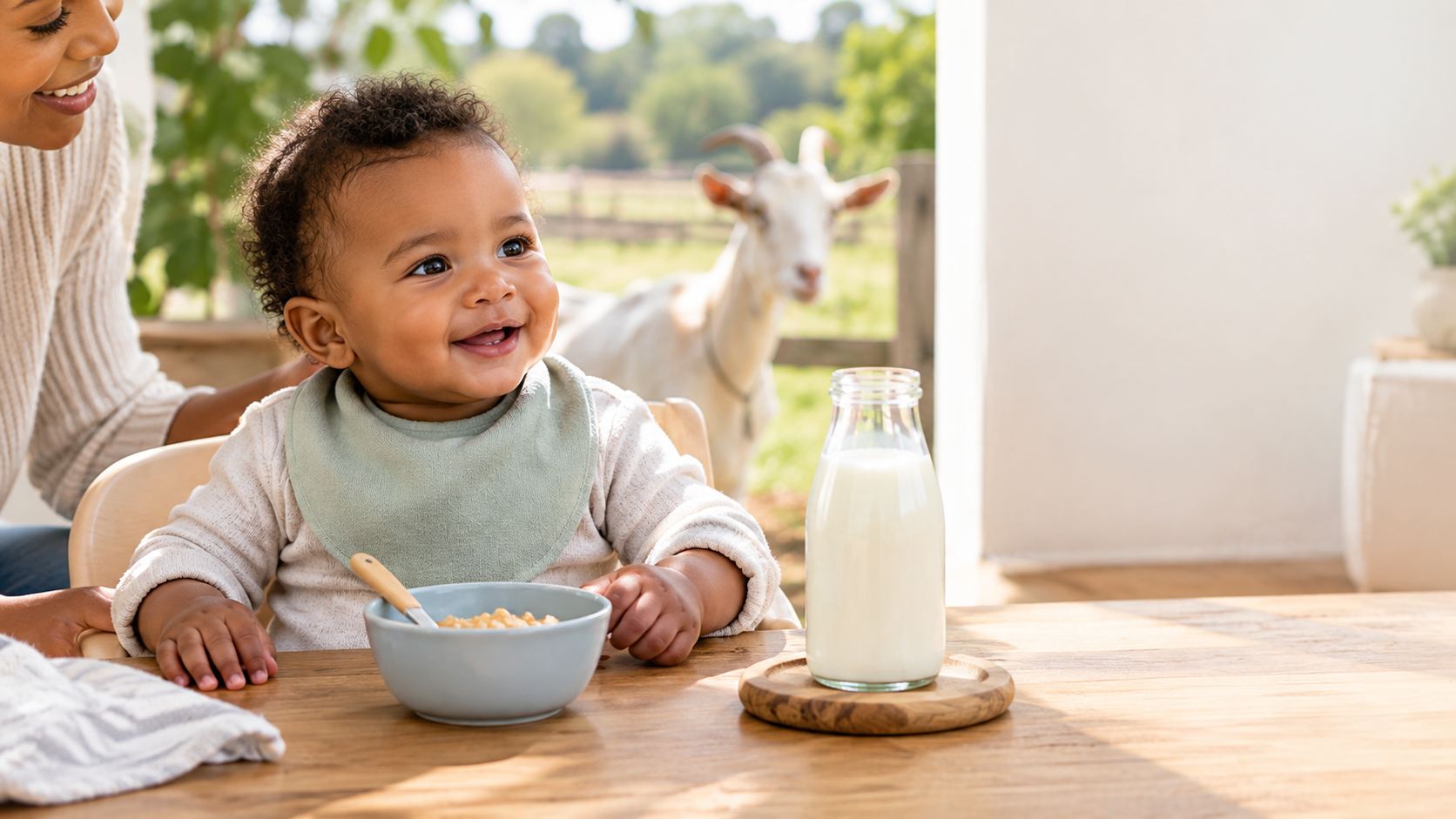
Is goat milk good for babies? Plain goat milk is generally not suitable as a baby’s main milk before 12 months of age. Babies need the specific balance of nutrients provided by breast milk or an appropriate infant formula during their first year.
Goat milk can be nutritious for older children and adults, but that does not mean ordinary goat milk is suitable for infants. Goat milk and goat-milk-based infant formula are also different products. Infant formula is specially formulated to meet a baby’s nutritional needs, while plain goat milk is not.
After a child reaches 12 months, pasteurized goat milk can generally be introduced as part of a balanced diet, provided there is no medical reason to avoid it.
Is Goat Milk Good for Babies?
For babies under 12 months, plain goat milk is not recommended as a replacement for breast milk or infant formula.
Although goat milk contains protein, fat, calcium and other nutrients, it does not naturally provide the nutritional balance an infant needs for healthy growth and development.
The American Academy of Pediatrics has warned against giving fresh goat milk to infants, and Cleveland Clinic’s pediatric guidance also advises against plain goat milk for babies younger than 1 year.
The issue is not that goat milk is inherently a bad food. The problem is that an infant’s nutritional requirements are very different from those of an older child or adult.
Quick answer
- Babies under 12 months: Do not use plain goat milk as their main milk.
- Breastfed babies: Continue breastfeeding according to your feeding plan.
- Formula-fed babies: Use an appropriate commercially prepared infant formula.
- Goat-milk infant formula: Different from ordinary goat milk and specially formulated for infants.
- Children 12 months and older: Pasteurized goat milk can generally be part of a balanced diet.
- Raw goat milk: Should be avoided because of the risk of harmful microorganisms.
Why Isn’t Goat Milk Recommended for Babies Under 12 Months?
A baby’s body is still developing during the first year of life. Infant nutrition requires an appropriate balance of protein, fat, carbohydrates, vitamins, minerals and other nutrients.
Plain goat milk does not provide that balance.
Some of the concerns associated with giving ordinary goat milk to infants include:
1. It can be too high in certain nutrients
Goat milk naturally contains relatively high concentrations of protein and minerals compared with what an infant needs.
A baby’s kidneys are still developing, so the nutritional composition of ordinary animal milk is not ideal for young infants.
2. It is low in folate
Goat milk is naturally low in folate, also known as vitamin B9.
Folate is important for normal growth and the formation of healthy blood cells. Relying heavily on goat milk during infancy can therefore contribute to nutritional deficiencies.
Cleveland Clinic specifically identifies folate deficiency and megaloblastic anemia as potential concerns associated with goat milk consumption in infants.
3. It does not provide enough iron
Iron is particularly important during infancy because it supports blood formation, growth and normal development.
Plain goat milk is not an adequate source of iron for a young baby, so using it as the baby’s primary milk can contribute to inadequate iron intake.
4. It can cause electrolyte problems
The balance of water and minerals in infant nutrition is important.
Cleveland Clinic notes that inappropriate goat milk consumption can contribute to hyponatremia, a condition involving abnormally low sodium levels in the blood.
5. Babies can have allergic reactions
Goat milk contains proteins that can cause allergic reactions.
A baby who reacts to cow’s milk protein may also react to goat milk because the proteins are similar.
For this reason, goat milk should not automatically be considered a safe alternative for a baby with a cow’s milk allergy.
6. Raw goat milk can carry harmful microorganisms
Raw or unpasteurized goat milk can contain harmful bacteria and other microorganisms.
Young babies are particularly vulnerable to serious infections, so raw goat milk should not be used as an infant feeding substitute.
Goat Milk vs. Goat-Milk Infant Formula
This is one of the most important distinctions parents need to understand.
Plain goat milk is not the same as goat-milk infant formula.
Goat-milk infant formula uses goat milk as a starting ingredient, but it is specially manufactured and nutritionally modified for babies.
Depending on the product and country, goat-milk infant formula may be available as an alternative to other infant formulas.
Cleveland Clinic notes that goat-milk formula can be a possible alternative to cow-milk-based formula when an appropriate commercial product is available.
Can a baby drink goat-milk infant formula?
A commercially prepared goat-milk infant formula may be appropriate for some babies when it meets applicable regulatory and nutritional requirements.
However, parents should choose an infant formula specifically intended for their baby’s age and follow the preparation instructions exactly.
Do not take ordinary goat milk and try to turn it into infant formula at home.
Is Goat Milk Better Than Cow Milk for Babies?
When comparing plain goat milk and plain cow milk, neither should be used as the main milk for a baby under 12 months.
Goat milk may have nutritional differences from cow milk, but those differences do not make ordinary goat milk an appropriate substitute for breast milk or infant formula during infancy.
The important question is not simply which animal’s milk contains more nutrients. The important question is whether the milk provides the nutritional balance a growing baby needs.
For babies younger than 12 months, that means breast milk or an appropriate infant formula rather than ordinary goat or cow milk.
Is Goat Milk Easier for Babies to Digest?
You may hear claims that goat milk is easier to digest than cow milk.
Goat milk has differences in its protein and fat composition, which is one reason some people believe it may be easier to tolerate.
However, being potentially easier to digest does not make ordinary goat milk appropriate for infants.
A baby’s nutritional needs are more important than whether a particular milk seems easier to digest.
If your baby has frequent vomiting, diarrhea, excessive crying during feeds, blood in the stool or other persistent digestive symptoms, speak with a healthcare professional rather than switching to goat milk on your own.
Can Babies With Cow’s Milk Allergy Drink Goat Milk?
Not necessarily.
Goat milk is not a reliable substitute for a baby with a cow’s milk protein allergy because the proteins in goat milk are sufficiently similar to cow’s milk proteins that cross-reactions can occur.
A baby with a milk allergy may experience symptoms such as:
- Vomiting
- Diarrhea
- Skin rashes or hives
- Blood in the stool
- Swelling
- Wheezing
- Breathing difficulties
Cleveland Clinic also notes that babies can have severe allergic reactions to goat milk.
If you suspect your baby has a milk allergy, speak with a pediatrician before introducing goat milk or changing formula.
Can Babies Drink Goat Milk After 12 Months?
Once a child reaches 12 months, the situation changes.
Pasteurized whole goat milk can generally be introduced as part of a balanced diet for a healthy toddler.
Cleveland Clinic’s pediatric guidance states that goat milk can be introduced after a child turns 1, while emphasizing that it should be part of a complete and balanced diet.
At this stage, milk is only one part of the child’s diet.
A toddler should also eat a variety of foods providing:
- Iron
- Protein
- Healthy fats
- Fruits and vegetables
- Whole grains
- Vitamins and minerals
Why is 12 months an important age?
Before 12 months, breast milk or infant formula is designed to provide the baby’s primary milk nutrition.
After 12 months, a healthy child can obtain an increasing proportion of nutrients from a varied solid-food diet, allowing pasteurized whole milk to become part of that diet.
Can a 6-Month-Old Drink Goat Milk?
A 6-month-old should not use ordinary goat milk as a replacement for breast milk or infant formula.
Around 6 months, many babies are ready to begin complementary foods, depending on their development.
However, introducing solid foods does not mean that plain goat milk should replace the baby’s primary milk source.
Breast milk or an appropriate infant formula remains important during this stage.
Can a 9-Month-Old Drink Goat Milk?
A 9-month-old should not be given ordinary goat milk as the main milk drink.
Even though a 9-month-old may already be eating several solid foods, the baby’s nutritional needs are still different from those of a toddler.
Continue breast milk or an appropriate infant formula rather than replacing it with plain goat milk.
Can a 1-Year-Old Drink Goat Milk?
Generally, yes.
Once a child reaches 12 months, pasteurized whole goat milk can generally be included in the child’s diet.
However, it should not replace a varied diet.
If your child has a milk allergy, poor growth, digestive problems or another medical condition, ask a healthcare professional before introducing goat milk.
Can Newborns Drink Goat Milk?
No. Plain goat milk should not be used as a newborn’s main milk.
Newborns have particularly specific nutritional requirements.
For newborn feeding, parents should follow guidance from their healthcare professional regarding breastfeeding and appropriate infant formula.
Do not attempt to make homemade formula using goat milk.
Can Babies Drink Raw Goat Milk?
No. Raw goat milk is not appropriate for babies.
Raw milk has not undergone pasteurization, which means harmful microorganisms may remain in it.
For older children who drink goat milk, pasteurized milk is the safer choice.
The risk is especially important for infants because their developing immune systems make serious infections more concerning.
Can Goat Milk Be Used in Baby Food?
Using a small amount of an ingredient in an age-appropriate food is different from using goat milk as a baby’s primary milk.
Parents should still be careful about the child’s age, preparation method and overall nutritional intake.
The key point is:
Using goat milk as an ingredient does not make plain goat milk appropriate as a replacement for breast milk or infant formula.
Can You Make Homemade Goat-Milk Formula?
No.
Parents should not attempt to make homemade infant formula from goat milk.
Infant formula requires a precise balance of nutrients and must be prepared and manufactured under controlled conditions.
Cleveland Clinic specifically advises against homemade formula, whether it is made from goat milk or cow milk.
A homemade recipe may not provide the correct amounts of protein, fat, carbohydrates, vitamins, minerals and other nutrients a baby requires.
What Are the Benefits of Goat Milk for Older Children?
Once a child is old enough to consume it, goat milk can provide several nutrients.
Protein
Goat milk provides protein, which contributes to normal growth and tissue development.
Calcium
Calcium supports the development and maintenance of healthy bones and teeth.
Phosphorus
Phosphorus works with calcium and plays several roles in the body.
Fat
Whole goat milk provides dietary fat and energy.
Other nutrients
Goat milk also contains various vitamins and minerals, although its nutritional profile differs from cow milk.
For toddlers, however, goat milk should be viewed as one component of a balanced diet, not as a complete source of nutrition.
Goat Milk for Babies: Age Guide
| Age | Can they drink plain goat milk? | Important point |
|---|---|---|
| Newborn | ❌ No | Use breast milk or appropriate infant formula |
| 1–5 months | ❌ No | Plain goat milk is not an appropriate main milk |
| Around 6 months | ❌ Not as the main milk | Complementary foods may begin while breast milk/formula remains important |
| 7–11 months | ❌ No as the main milk | Continue breast milk or appropriate infant formula |
| 12 months+ | ✅ Generally | Use pasteurized whole goat milk as part of a balanced diet |
This table is a general guide. Babies with allergies, feeding difficulties, growth concerns or medical conditions may require individualized advice.
Goat Milk vs. Goat-Milk Formula vs. Breast Milk
| Plain Goat Milk | Goat-Milk Infant Formula | Breast Milk | |
|---|---|---|---|
| Designed specifically for human infants | No | Yes | Yes |
| Appropriate as the primary milk under 12 months | No | May be appropriate depending on product and baby’s needs | Yes |
| Nutritionally modified for infants | No | Yes | Naturally suited to infants |
| Can be used after 12 months | Generally yes | Depends on product | Can continue if desired |
| Should parents make it at home? | No | No | Not applicable |
The most important takeaway is that plain goat milk should not be confused with goat-milk infant formula.
What Should Parents Check Before Giving a Child Goat Milk?
If your child is under 12 months, do not choose ordinary goat milk as a substitute for breast milk or infant formula.
If your child is 12 months or older and you want to introduce goat milk:
- Choose pasteurized milk.
- Check the expiration date.
- Keep it refrigerated.
- Introduce it as part of a varied diet.
- Make sure your child continues to get iron-rich foods.
- Watch for signs of an allergic reaction.
- Speak with your child’s healthcare professional if you have concerns about allergies, digestion or growth.
When Should You Talk to a Pediatrician?
Talk with your baby’s healthcare professional before changing the baby’s primary milk if your child:
- Has a suspected milk allergy
- Has repeated vomiting or diarrhea
- Has blood in the stool
- Has difficulty feeding
- Is not gaining weight appropriately
- Has persistent digestive problems
- Has been diagnosed with anemia
- Was born prematurely or has special nutritional needs
Do not rely on goat milk as a home treatment for feeding or digestive problems.
Frequently Asked Questions About Goat Milk for Babies
Is goat milk good for babies?
Plain goat milk is not recommended as the main milk for babies under 12 months. After 12 months, pasteurized goat milk can generally be part of a balanced diet.
What age can babies drink goat milk?
Plain goat milk can generally be introduced after a child reaches 12 months, assuming there is no medical reason to avoid it.
Can a 6-month-old drink goat milk?
A 6-month-old should not use plain goat milk as a replacement for breast milk or infant formula.
Can a 9-month-old drink goat milk?
Plain goat milk should not replace breast milk or infant formula for a 9-month-old.
Can a 1-year-old drink goat milk?
Yes, a healthy 1-year-old can generally have pasteurized whole goat milk as part of a balanced diet.
Is goat milk better than cow milk for babies?
Neither plain goat milk nor plain cow milk should replace breast milk or infant formula as the main milk for babies under 12 months.
Is goat-milk formula the same as goat milk?
No. Goat-milk infant formula is specially formulated and nutritionally modified for infants, while ordinary goat milk is not.
Is goat milk good for babies with cow’s milk allergy?
Not necessarily. Goat milk proteins are similar to cow milk proteins, so some babies with cow’s milk protein allergy may also react to goat milk.
Is goat milk easier to digest than cow milk for babies?
Some people find goat milk easier to tolerate, but this does not make ordinary goat milk suitable as the main milk for babies under 12 months.
Can babies drink raw goat milk?
No. Raw goat milk can contain harmful microorganisms and should not be used as an infant milk.
Can you make baby formula from goat milk at home?
No. Homemade infant formula can fail to provide the precise nutrition babies need and should not be used.
Does goat milk contain enough iron for babies?
No. Plain goat milk is not an adequate source of iron for infants and should not be used as their main milk.
Can goat milk help a baby gain weight?
Plain goat milk should not be used to treat poor weight gain. If your baby is not gaining weight properly, consult a healthcare professional.
Can goat milk help with baby constipation?
Goat milk should not be used as a treatment for constipation in babies. Persistent constipation should be discussed with a healthcare professional.
Bottom Line: Is Goat Milk Good for Babies?
Is goat milk good for babies? It depends on the baby’s age and the type of goat milk.
For babies under 12 months, plain goat milk should not replace breast milk or an appropriate infant formula. It does not provide the nutritional balance babies need and can contribute to problems such as inadequate iron and folate intake.
Goat-milk infant formula is different from ordinary goat milk because it is specially formulated for infants.
After 12 months, pasteurized whole goat milk can generally be introduced as part of a varied, balanced diet.
The simplest rule for parents is:
Plain goat milk is not a suitable main milk for babies under 12 months. After 12 months, pasteurized goat milk can generally be part of a balanced toddler diet.
If your baby has an allergy, feeding difficulty, digestive symptoms or growth concerns, speak with a pediatrician before changing their milk.
